
Hair restoration · coordinated in Istanbul
Beard transplant in Turkey
A beard transplant fills patchy cheeks, a thin jawline or a gap that never closed, and it does it with hair taken from the back of your head. That sentence contains the whole decision. The follicles are scalp follicles, they come from the one patch of you that resists going bald, and they do not grow back where they came from.
Istanbul European Clinic Medical Travel Services is a medical travel coordination company in Istanbul: we work with independent partner surgeons who operate at their own clinics or at accredited hospitals. A bilingual coordinator handles your dates, hotel, transfers and interpreting, while every clinical decision, including how many grafts you should have and whether you should have the procedure at all, is made independently by your chosen partner surgeon. Istanbul European Clinic does not perform procedures and does not guarantee outcomes.

An independent partner surgeon checked the medical claims on this page. What applies to your own case is decided by the surgeon who examines you.
How much does a beard transplant cost in Turkey?
From €1,900 through our partner surgeons, as a flat package rather than a price per graft.
There is no reliable published figure for what a beard transplant costs in the UK or the United States, so this page is not going to invent one. What does exist is a 2026 analysis of published UK clinic pricing for scalp hair transplants, and it is a fair benchmark for one specific reason: the part those clinics are charging per graft, the FUE extraction, is the identical operation whether the follicle is going to a scalp or a jaw. That analysis puts the UK average at £3.25 per graft, which works out at roughly £6,500 for a 2,000 graft case. A full beard is commonly 1,500 to 2,500 grafts. The Turkish package does not move with the count.
Two things follow, and only one of them is good news. The good one is that you are not paying per graft. The other is that the graft count has just lost its only financial brake, and on this page the graft count was never a budget question anyway. It is a question about your scalp, and the next section is the reason this page exists. For the record: the previous version of this page carried a price table putting the UK at €6,000 to €15,000 and Germany at €4,000 to €8,000, with no source attached to either. We could not find one, so the table is gone rather than repeated.
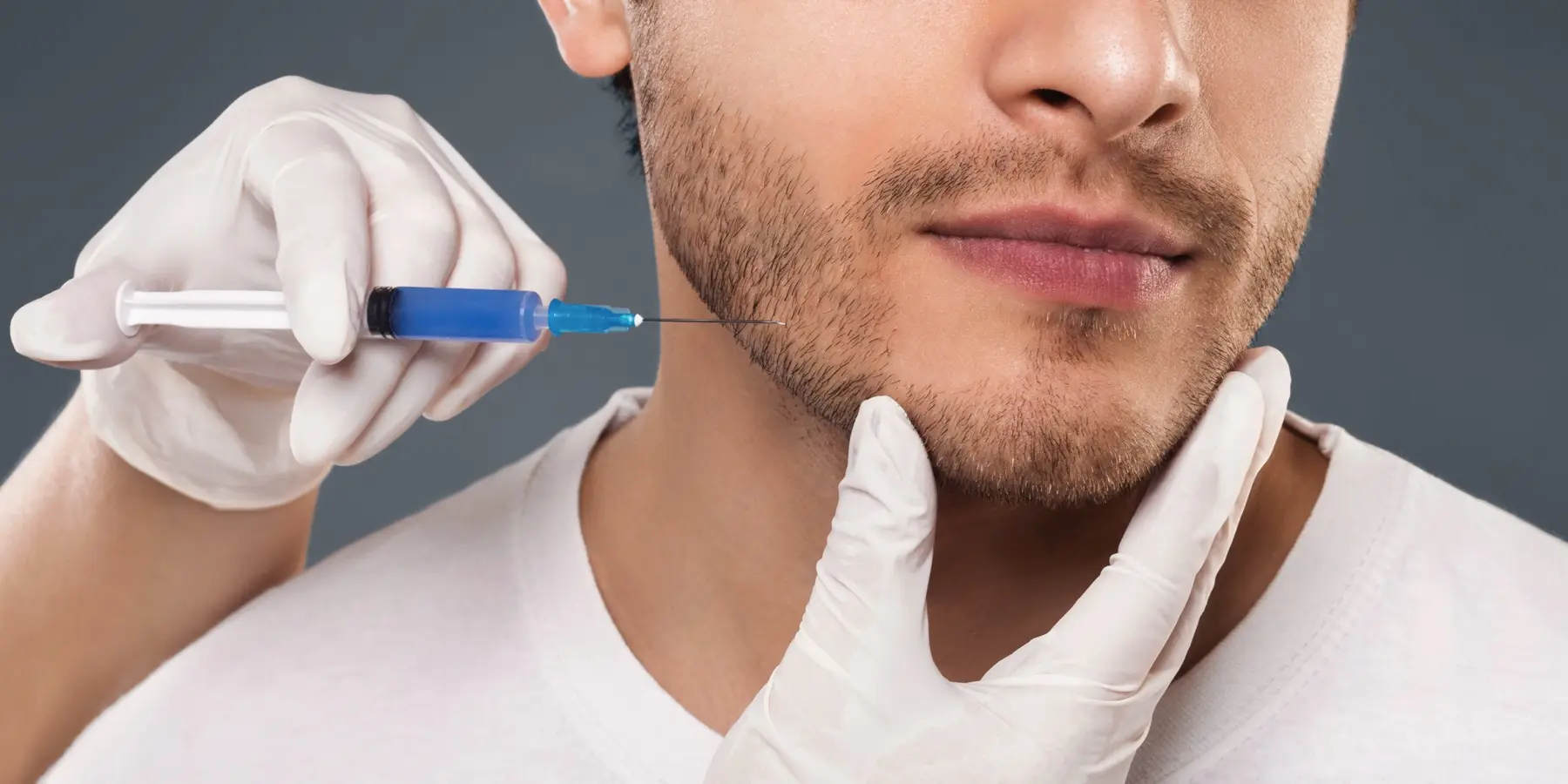
The grafts come from your scalp, and you only get them once
Here is the fact the rest of the decision hangs on, and it is almost never in beard transplant marketing: the hair in your new beard is scalp hair. It is punched out of the back and sides of your head, the occipital donor area, one follicle at a time. That is the same finite, non-regenerating patch that a hair transplant draws on, and it is the only hair you have that resists male pattern baldness.
So this is not simply a purchase. It is an allocation. Every graft that goes into your jaw is a graft that is no longer available for your hairline, and it is gone from the donor area permanently. If you are already thinning, or your father and his brothers went bald, you are deciding which of the two gets the hair, at 25 or 30, on incomplete information about what you will need at 45.
A 2026 review in Frontiers in Medicine puts a number on how much can safely come out: many authors recommend limiting extraction to 10% to 20% of the baseline follicular unit density per session. Go past it and the published consequences are visible thinning of the donor area, a "moth-eaten" appearance, a "window" effect, or permanent donor depletion. That ceiling applies to any FUE session. It just costs more here, because here the donor area is being spent on something other than your head.
- Ask for the arithmetic out loud. A full beard is commonly 1,500 to 2,500 grafts. Ask what percentage of your measured donor density that represents, and what is left afterwards. If nobody has measured the density, nobody has done the arithmetic, and the graft number in your quote came from a price tier rather than from your head.
- Say your family history out loud too. If your hair loss has not started yet, family history is the only evidence you have about it, and it is worth more than the photograph of a beard you brought in. A surgeon planning your beard without asking what your hairline is going to need is planning half the operation.
- The order is not reversible. Hair first, then beard, leaves you a choice later. Beard first, then hair, can leave you with a beard and not enough donor left to fix the hairline. That is worth deciding on purpose rather than by whichever consultation you happened to book first.
- Ask who holds the punch. In some high-volume operations the extraction and the implantation are done by technicians rather than the surgeon you had the consultation with. That is legal in Turkey and common. It is also the question most likely to get a vague answer, and the vagueness is the answer.
None of this is an argument against having it. Plenty of men have plenty of donor hair, no family history worth worrying about, and a patchy beard that bothers them every morning. It is an argument for knowing what the currency is before you spend it, because the version of this that hurts is the one nobody warned you about: yes, you can have both, right up until you cannot.
Facial hair does not behave like scalp hair
The follicles keep their scalp genetics, which is the good part: transplanted beard hair generally grows for life. It also keeps growing like head hair rather than settling at beard length, so it needs trimming. Everything else about the operation changes at the jawline.
- The angle is the whole job. Beard hair leaves the skin at a much flatter angle than scalp hair, close to lying against the face. Grafts placed at a scalp angle stand up, and a beard that stands up reads as wrong before anyone can say why.
- The direction changes across the face. Hair on the cheek, the jawline, the moustache and under the chin all run different ways. They have to be followed rather than filled in, which is why the grafts go in one at a time and why a beard case is slower per graft than a scalp case of the same size.
- Mistakes are more visible here. People look at faces from a metre away, in conversation, for minutes at a time. Nobody examines the back of your head like that. The same imperfection that disappears on a scalp does not disappear on a jaw.
- Density is not the brief. On a scalp you are buying coverage. On a face you are buying angles and direction, and a dense beard pointing the wrong way looks worse than a thinner one pointing the right way.
The practical consequence: the graft count is what clinics advertise and it is the part of a beard transplant that tells you least. Ask instead to see faces, at 12 months, in ordinary light, from patients whose hair grows the way yours does. A surgeon whose portfolio is mostly hairlines is showing you a different skill to the one you are buying.
The risks, and the evidence that runs the other way
Start with the half of this operation that is well documented. The extraction is FUE, and FUE is the most studied thing in hair restoration: a 2025 review in Dermatologic Surgery summarising the field drew on 1,030 studies published between 2019 and 2024, and large clinical series put overall complications for FUE hair transplantation at 1.2% to 4.7%. That describes taking follicles out of a scalp, which is exactly what happens to you here.
Now the half that is not. When published research pairs the words "beard" and "transplant", it is usually studying the beard as a donor: taking facial hair and moving it up to the scalp to supplement a depleted head donor area. The direction most men arrive on this page wanting, scalp down to face, has far less published long-term outcome data behind it. We are not going to put a percentage on that gap, because there is no honest one to put. It is simply worth knowing that this operation is better evidenced running the other way.
The published complications split into two lists, and the split is the point. Both come from the FUE hair transplantation literature, where the recipient area is usually a scalp rather than a face.
| Where | What can go wrong |
|---|---|
| Donor area, the back of your head | Overharvesting and permanent depletion, hypopigmentation, abnormal scarring, inclusion cysts, donor-site effluvium |
| Recipient area, your face | Folliculitis, persistent redness around the follicles, effluvium (shedding), unnatural-looking results and, rarely, skin necrosis |
- Shock loss is expected, not a complication. The transplanted hairs commonly shed a few weeks in and regrow from around month three. Men panic here every single time. The follicle is still there, under the skin.
- The donor list is the one that lasts. Redness on a cheek resolves. Swelling resolves. A depleted donor area does not, and it is also the place a future hair transplant would have had to come from.
- Be sceptical of precise success percentages, including flattering ones. The 2026 review states that the evidence "remains heterogeneous, with substantial variability in complication definitions and reporting". If a clinic tells you a beard transplant has a 90% to 95% success rate, ask which study that comes from.
That last point is not hypothetical. This page used to make exactly that claim, a "90% to 95%" success rate, with nothing behind it. We removed it while rebuilding rather than keep a number we could not source. Nobody can tell you in advance what proportion of your grafts will take, and a figure that confident, on a question the literature has not settled, is a marketing decision rather than a measurement.
Who is a realistic candidate
- Enough donor density, first and last. This is the hard limit, it is measured on your scalp rather than estimated from a photograph of your face, and it decides what is possible before anything else does.
- Patchy or uneven growth, rather than none at all. Genetic patchiness, a thin jawline, gaps that never filled in: this is the classic indication, and scalp hair will grow there permanently.
- Scarring, which is a genuine indication. Acne scars, burns and surgical scars on the face can be camouflaged this way. Scarred skin has a poorer blood supply than healthy skin, and a surgeon should say so out loud rather than treat your case as routine.
- Old enough that your beard has stopped arguing. Facial hair commonly keeps filling in into the mid twenties. Twenty-five is not a deadline, it is roughly when the evidence about your own face stops changing, and it is worth being sure the patch is permanent before spending scalp on it.
- Honest about your hairline. If your hair is thinning, or your family history says it is going to, say so in the consultation. This is the single piece of information that should change the plan, and it is the one nobody volunteers.
- Healthy, and not smoking. Blood-borne viruses and uncontrolled chronic conditions have to be declared. Nicotine constricts the blood supply the grafts need to survive their first days, on a face as much as on a scalp.
- Patient. Twelve months to the finished beard, with a discouraging middle where the transplanted hair falls out and you wonder what you have done. If you need to look different by the summer, this is the wrong procedure.
A partner surgeon who tells you to wait, or who tells you your donor area would be better spent on your hairline, is not fumbling a sale. They are answering the question this page is about, and it is the one question a package price cannot answer for you.
The timeline
- Day 0The procedure: 2 to 5 hours under local anaesthetic, awake, with breaks. Grafts come out of the back of your head and go into your face one at a time. You go back to the hotel the same day.
- Days 1 to 3First wash at the clinic and a check of the grafts before you fly. Swelling around the cheeks and jaw, usually settling within 3 to 5 days.
- Week 1Small scabs across the transplanted area and a face that is red and crusted. This is the stage nobody is prepared for, because unlike a scalp case there is nothing to hide it under. The washing protocol matters more than it sounds: the grafts are not secure yet, and your face is the part of you that gets touched, wiped and rubbed without thinking.
- Weeks 2 to 4Scabs clear, then the transplanted hairs shed. This is shock loss, it is normal, and the follicle stays in place under the skin. Redness can linger for a few weeks after the scabs have gone.
- Months 3 to 6New growth starts, fine and sparse, and it arrives unevenly. The beard looks patchy through this whole window and it is not the result. Judging it here is judging the wrong thing.
- Month 12The finished beard. It thickens and settles, and from here you trim, shave and style it like the rest of your facial hair, because that is now what it is.
Plan roughly 3 days in Turkey: the procedure, the first wash and a check before flying. On the flight, keep everything off the grafts, so no scarf, no hand resting on your chin and nothing pressed against your face while you sleep. Do not shave the transplanted area until your surgeon says so.
Sources
Figures on this page that come from published research are listed here with the study they come from, so you can check them yourself.

What we actually do
The travel part is our job
Your surgeon handles the medicine. We handle everything around it: the dates, the hotel, the airport transfers and an interpreter who stays with you at the appointments, so nothing gets lost between languages.
Photo: Engin Yapici / Unsplash
Frequently asked questions
How much beard transplant Turkey?
Coordinated through our partner surgeons it starts from €1,900, as a flat package rather than a price per graft. There is no reliable published figure for what a beard transplant costs in the UK or the United States, so this page is not going to print one. The closest honest benchmark is scalp hair transplant pricing, where a 2026 analysis of UK clinics found an average of £3.25 per graft, roughly £6,500 for a 2,000 graft case. The extraction work is identical whether the hair ends up on a head or a jaw.
How much is 3,000 grafts in Turkey?
The package does not move with the graft count, so the invoice answer is the same €1,900. The better question is whether 3,000 grafts should be coming out of your head at all. A full beard is commonly 1,500 to 2,500 grafts, and every one of them is taken from the same finite donor area on the back of your scalp that a hair transplant would need. A 2026 review in Frontiers in Medicine notes that many authors recommend limiting extraction to 10% to 20% of the baseline follicular unit density per session, because taking too much causes visible thinning, a "moth-eaten" appearance or permanent donor depletion. A graft number that is generous with your donor area is not generosity.
How long do beard implants last?
They are generally permanent. The follicles come from the back of your scalp, which is genetically resistant to the hormone that drives male pattern baldness, so they keep growing on your face for life. They also keep growing like head hair rather than beard hair, which means trimming. The part that is also permanent, and much less advertised: those follicles are gone from your scalp. They do not grow back there, and they were the only hair you had that resists balding.
How risky is a beard transplant?
Low risk as surgery goes. The extraction is FUE, and large clinical series put overall complications for FUE hair transplantation at 1.2% to 4.7%. The published problems split in two. On the recipient area: folliculitis, persistent redness around the follicles, effluvium (shedding), unnatural-looking results and, rarely, skin necrosis. On the donor area: overharvesting and permanent depletion, hypopigmentation, abnormal scarring, inclusion cysts and donor-site effluvium. The first list resolves. The second does not. Worth knowing that the same 2026 review says the evidence base itself is uneven, with most studies observational and no standard definition of what counts as a complication, so treat any clinic quoting you a precise success percentage with suspicion, including a flattering one.
Is 25 too late to grow a beard?
No. Facial hair commonly keeps filling in into the mid twenties, which is exactly why 25 is a useful marker: it is roughly the point at which the evidence about your own face stops changing. If your beard is still sparse at 25, it probably is not going to arrive on its own, and a transplant is a reasonable option. The catch is that 25 is also early in the other direction. Your hairline may not have declared itself yet, and the grafts for your beard come out of the same donor area a hair transplant would need. Being sure about the beard is half the decision. The other half is your head.
Can I get a beard in Turkey?
Yes, if you have enough donor hair on the back of your scalp and are in reasonable health. Donor density is the hard limit and it is measured on your head, not estimated from a photograph of your face. The second question, which almost nobody asks, is whether your scalp can afford it. The beard is built from hair that would otherwise have been available for your hairline, and that transfer only runs one way.
What is a good beard size for a Turkey?
This one is a search engine artefact rather than a question about surgery, but if you mean density: it is not a number you pick from a menu. What a surgeon can build is set by your donor area, the area being covered and the way hair falls on your particular face, and it is a judgement made on examination. We have deliberately not printed a grafts-per-square-centimetre figure here, because the ones circulating online are not attached to a source we could check. Ask your surgeon what they are planning for you, and what it costs your donor area.
What is the 3 month beard rule?
In transplant terms, month three is roughly when the shedding phase ends and new growth starts coming through. It is fine, sparse and uneven at first, and the beard looks patchy for months after that. It is the earliest point at which anything is worth looking at, and it still is not the result. The finished beard is at 12 months.
How painful is a beard transplant procedure?
The procedure is done under local anaesthetic, so you should not feel the extraction or the implantation. The anaesthetic injections themselves sting. Afterwards most men describe soreness and tightness rather than pain, managed with ordinary painkillers, plus swelling around the cheeks and jaw for 3 to 5 days. The genuinely unpleasant part is not the pain. It is looking at a red, crusted face in the mirror for a week with nothing to hide it under.
Are hair transplants worth it in Turkey?
Financially the case is straightforward: the package is flat, the exchange rate is in your favour, and the surgeons do high volumes of this work. The question worth more of your time is not whether Turkey is worth it, but which transplant you are having. Beard grafts and scalp grafts come out of the same donor area, and it does not refill. If your hair is thinning, or your family history says it will, a beard transplant is not only a beard transplant. It is a decision about where your remaining permanent hair is going to live.
What factors explain price differences for beard transplant between countries?
Labour costs, cost of living and operational expenses are lower in Turkey, and the exchange rate does the rest. That part is real and it is not a comment on quality. The structural difference matters more than the currency one: UK and US clinics price per graft, Turkish clinics sell a flat package. Priced per graft, the number is restrained by what you are willing to pay. In a flat package it is restrained by nothing except the surgeon's judgement, and that is the thing you are actually choosing.
What’s included in a typical beard transplant package in Turkey?
A standard package covers the consultation, blood tests, the procedure under local anaesthetic, post-operative medication and lotions, 2 to 3 nights in a hotel, airport and clinic transfers and an interpreter. Flights are usually not included. Ask two things beyond the list. First, who performs the extraction and the implantation, because in some high-volume operations it is technicians rather than the surgeon you consulted, and on a face every graft is placed individually and at an angle. Second, what this beard leaves you with if you want a hair transplant in ten years.
How do I compare beard transplant pricing across clinics?
Ask for the breakdown, because some quotes exclude medication, aftercare or the hotel. That is the easy half. The harder half is that two clinics quoting the same price for the same face can be planning very different graft counts, and the bigger number is not the better deal when it is being taken out of a donor area you cannot refill. Compare the plan, not the invoice.
What is the process for obtaining a personalized quote for beard transplant overseas?
You send clear photographs of your face from the front and both sides, and of the donor area at the back of your head. An independent partner surgeon reviews them, estimates the graft count and sets out a plan and a price. Treat the remote estimate as provisional. Donor density is properly assessed in person, and an honest surgeon may revise the number down after examining you, or tell you your donor area would be better spent elsewhere.
Where can I get all-inclusive packages for beard transplant with hotel and transfers?
Most Istanbul clinics offer them, and coordination companies like ours arrange them around the surgeon you choose. The package is the easy part of this decision. A better hotel has no bearing on whether the grafts go in at the right angle or whether your donor area is respected, so do not let the accommodation decide a medical question.
How do clinics handle complications if they occur after returning home?
Reputable partner surgeons provide aftercare remotely and will tell you whether something can be managed where you are or needs to be seen in person. Get the policy in writing before you travel, including what happens if growth is poor at 12 months, because that is the complaint that actually arises and the one packages are least clear about.
How can international patients compare accredited clinics for beard transplant abroad?
Compare on the surgeon's specific experience with facial hair rather than scalp hair, because they are not the same job: beard grafts go in at a much flatter angle, they run in different directions across the cheek, jaw and moustache, and they are placed one at a time. Ask to see faces at 12 months, in ordinary light, from patients whose hair type and growth pattern resemble yours. Then ask the two questions no portfolio answers: what is my donor density, and what does this plan leave me.
How can I verify clinic accreditations and patient reviews before traveling for surgery?
Check that the clinic is registered with the Turkish Ministry of Health and that the surgeon holds a valid licence. Look for reviews on independent platforms rather than a gallery the clinic curates itself, and ask to see results from patients with a similar beard pattern to yours. Before and after photographs are selected by the person showing them to you, which does not make them fake, but does make them unrepresentative by design.
What are the safest ways to arrange a medical trip for beard transplant in Turkey?
Either book directly with a clinic you have verified yourself, or work through a medical travel coordinator who is clear about what they are. Istanbul European Clinic Medical Travel Services is a coordination company: we arrange travel, accommodation, transfers and interpreting, and we introduce you to independent partner surgeons who assess your case and carry clinical responsibility for it. We do not perform procedures and we do not employ the surgeons. Whichever route you take, have a video consultation and know the surgeon's name before you fly.
Is Turkey a safe place for surgery?
It can be, and the variable is the clinic rather than the country. Turkey has a large medical tourism sector regulated by the Ministry of Health, and surgeons who perform very high volumes of hair restoration work, which is genuine experience. It also has a bottom end of the market competing on price and on graft numbers. Verify the registration, get the operating surgeon's name in advance, and ask who is actually holding the punch. For a beard transplant the country is not the thing that should worry you. Your donor area is.