
Hair restoration · coordinated in Istanbul
Hair transplant in Turkey
A hair transplant moves follicles from the back and sides of your head, where hair is genetically resistant to male pattern baldness, to the areas where it has thinned. The transplanted hair generally keeps growing for life. The hair around it is not protected and can carry on receding, which is why the plan matters more than the procedure.
Istanbul European Clinic Medical Travel Services is a medical travel coordination company in Istanbul: we work with independent partner surgeons who operate at their own clinics or at accredited hospitals. A bilingual coordinator handles your dates, hotel, transfers and interpreting, while every clinical decision, including how many grafts you should have and whether you should have the procedure at all, is made independently by your chosen partner surgeon. Istanbul European Clinic does not perform procedures and does not guarantee outcomes.
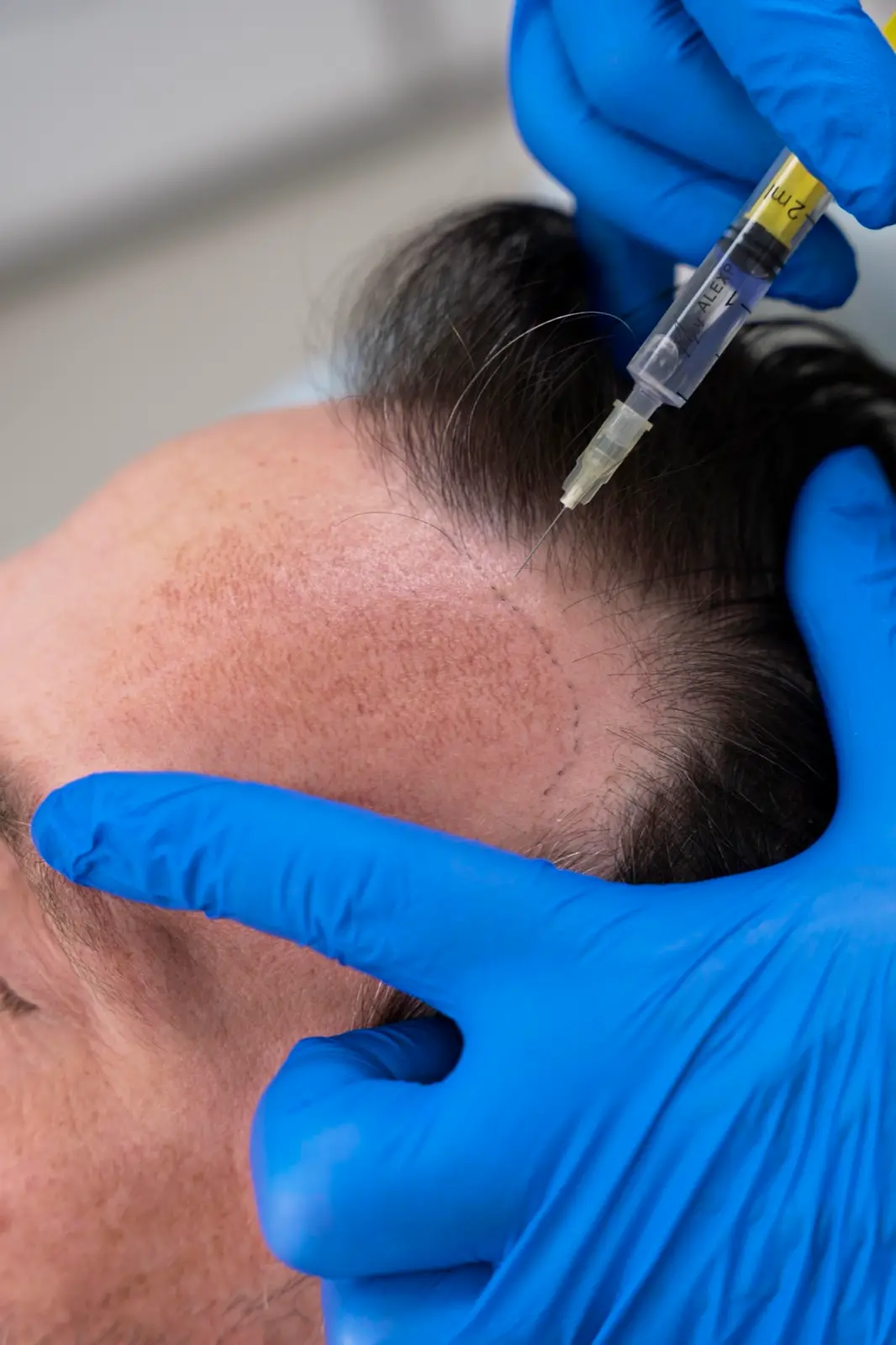
An independent partner surgeon checked the medical claims on this page. What applies to your own case is decided by the surgeon who examines you.
How much does a hair transplant cost in Turkey?
From €1,900 through our partner surgeons, as a flat package. That is the whole number, not a price per graft, and the difference between those two models is the most useful thing on this page.
| Where | Typical cost | How it is priced |
|---|---|---|
| Turkey, partner surgeons | from €1,900 | Flat package. The graft count does not change the invoice |
| United Kingdom | £4,820 for 1,500 grafts | Per graft, averaging £3.25. So ~£6,500 at 2,000 grafts and ~£13,000 at 4,000 |
| United States | $6,000 – $12,000 | Per graft. Can exceed $15,000 depending on the count |
The UK figure is a 2026 analysis of published clinic pricing and includes consultation, the procedure with anaesthetic, and aftercare. The US range is GoodRx's. Both countries make you pay for every extra graft. Turkey does not, and that is genuinely cheaper, but it also removes the one thing that was quietly limiting how many grafts anyone took out of your head. Read the next section before you treat a big graft number as a bargain.
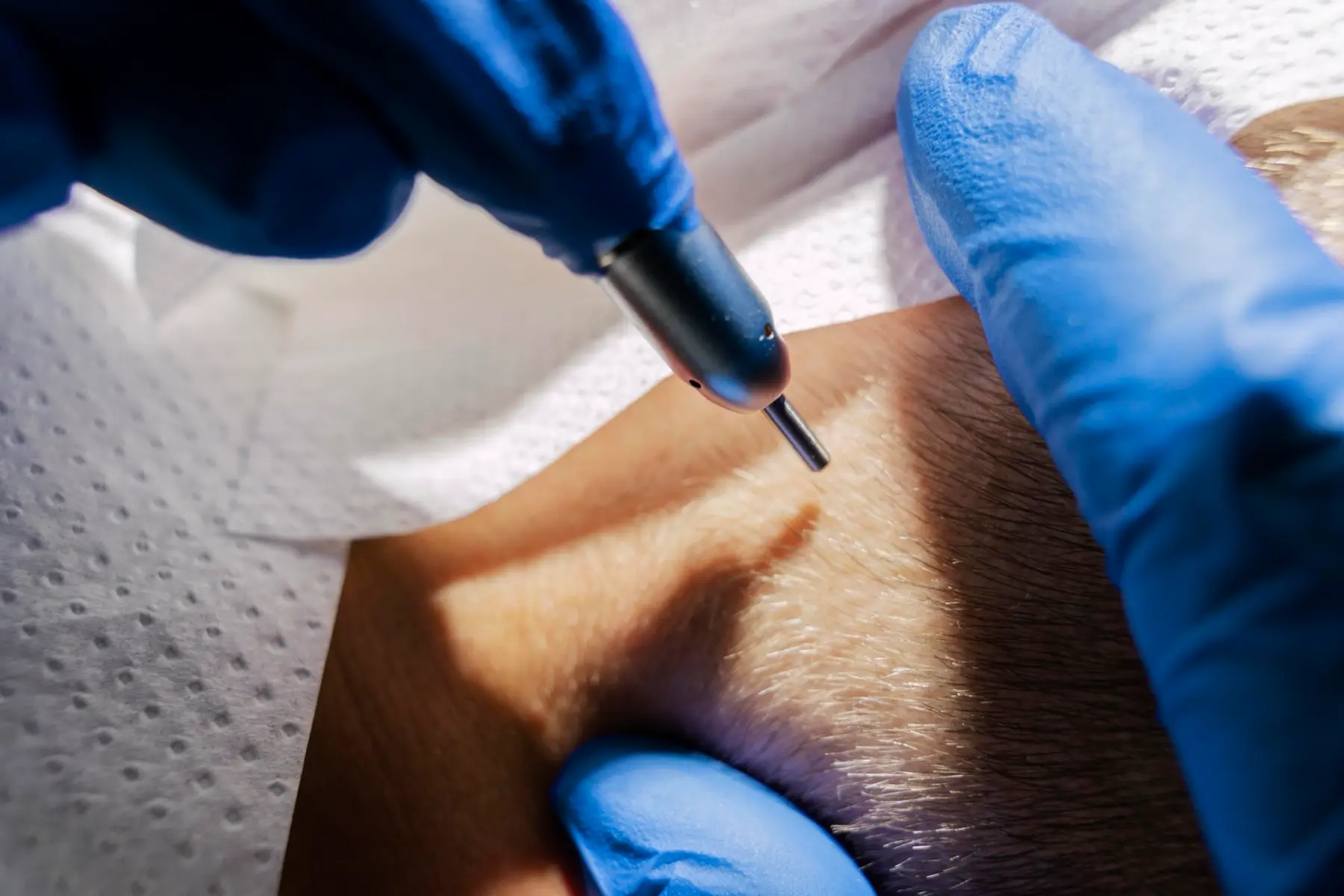
How many grafts you need, and the limit nobody advertises
Turkish clinics compete on graft numbers because they cannot compete on price per graft: when the package is flat, "up to 5,000 grafts included" is the only lever left. It sounds like generosity. It is the part of this decision with the least room for error.
Your donor area is finite and it does not regenerate. Follicles taken from the back and sides are gone from there permanently, and they are the only follicles you have that resist balding. A 2026 review in Frontiers in Medicine puts a number on the safe ceiling: many authors recommend limiting extraction to 10% to 20% of the baseline follicular unit density per session. Go past it and the published consequences are visible thinning of the donor area, a "moth-eaten" look, a "window" effect, or permanent donor depletion.
None of that can be fixed later. A thin recipient area can be topped up in a second session if you have donor hair left. A stripped donor area is the end of the road, and it is also where a second session would have had to come from.
- Ask what your donor density actually is, and what percentage of it the plan takes. If nobody has measured it, nobody has planned it.
- Treat a big graft number as a claim, not a gift. The right number is set by your donor area and the area you need covered, not by what is included in the package tier.
- Ask what is left for later. If your hair loss has not stabilised, and at 25 it usually has not, you will probably need a second procedure in ten years. The plan should reserve donor hair for it.
- Ask who holds the punch. In some high-volume operations the extraction and implantation are done by technicians rather than the surgeon you had the consultation with. That is legal in Turkey and common. It is also the single question most likely to get a vague answer, and the vagueness is the answer.
The honest version of the Turkish price advantage: you are not paying per graft, so nobody is charging you more for taking more. That means the brake on over-harvesting is not financial. It is the surgeon's judgement, and it is the thing you are actually choosing.
FUE, DHI and what actually differs
These two words are sold as rival procedures. They are not. FUE describes how the follicles come out; DHI describes how they go back in. Almost every hair transplant in Turkey is an FUE extraction. What varies is the implantation step.
- FUE (follicular unit excision): follicles are punched out of the donor area one at a time. This is the extraction method behind essentially all modern hair transplants, including the ones marketed as DHI.
- Classic implantation: the surgeon opens the recipient channels first, then places the grafts into them with forceps.
- DHI (direct hair implantation): a pen-shaped implanter opens the channel and places the graft in one movement, so the grafts spend less time outside the body and the channels are not pre-cut.
- Sapphire FUE: the same FUE, with sapphire-tipped blades to open the channels instead of steel. A blade material, not a different operation.
What the evidence supports, stated plainly: DHI has a logical rationale and is used competently by many surgeons, but we could not find a current, high-quality study showing it produces better results than a well-executed conventional FUE. The most recent review of the field, published in February 2026, does not compare the techniques at all, and says outright that the literature is mostly observational, single-centre, and inconsistent in how it even defines a complication. So a clinic charging you a premium for DHI is charging for a technique preference, which is legitimate, and not for a proven better outcome, which would not be. Pick the surgeon, and let them pick the tool.
The risks, with the numbers that exist
A hair transplant is minor surgery, and the risk profile is genuinely low compared with most of what is on this site. Large clinical series put overall complications at 1.2% to 4.7%. The published problems fall into two groups, and the second group is the one that lasts.
| Where | What can go wrong |
|---|---|
| Recipient area | Folliculitis, persistent redness around the follicles, effluvium (shedding), unnatural-looking results and, rarely, skin necrosis |
| Donor area | Overharvesting and permanent depletion, hypopigmentation, abnormal scarring, inclusion cysts, donor-site effluvium |
- Shock loss is expected, not a complication. Transplanted hairs commonly shed a few weeks in and regrow from month three or four. People panic here every single time.
- An unnatural hairline is a design failure, not a surgical one. It comes from a hairline placed too low or too straight for the face it will age into, and it is very hard to correct.
- Be sceptical of precise success percentages, including flattering ones. The 2026 review states that the evidence "remains heterogeneous, with substantial variability in complication definitions and reporting". A clinic that quotes you "95% graft survival" is quoting a number the published literature does not reliably support in either direction.
That last point is worth sitting with. We removed a "90% to 95% success rate" claim from this page while rebuilding it, because we could not find a source for it. Nobody can tell you in advance what percentage of your grafts will take, and the specificity of the number is a sign of marketing rather than measurement.
Who is a realistic candidate
- Stable hair loss. If you are still actively losing hair, a transplant fills today's gap while tomorrow's opens behind it. Surgeons often advise waiting, or starting medication first, and that advice is a good sign rather than a stall.
- Enough donor density. This is the hard limit. It is measured, not estimated from a photograph, and it decides what is possible before anything else does.
- The right kind of loss. Male pattern baldness is the classic indication. Scarring alopecias, active autoimmune hair loss and untreated thyroid problems are a different conversation, and transplanting into them can fail outright.
- Realistic about coverage. A transplant redistributes hair, it does not create it. Advanced loss means choosing where the hair you have will do the most good, and that usually means the front, not the crown.
- Non-smoker, ideally. Nicotine constricts the blood supply the grafts need to survive their first days.
- Patient. Twelve to eighteen months to the final result, with a discouraging middle. If you need to look different in three months, this is the wrong procedure.
A partner surgeon who tells you to wait two years and take medication first is not losing a sale by accident. They are telling you your loss has not stabilised, which is exactly the information the graft count depends on.
The timeline
- Day 0The procedure: 4 to 8 hours under local anaesthetic, awake, with breaks. You go back to the hotel the same day.
- Days 1 to 3First wash at the clinic, usually on day 2 or 3, and a check of the grafts before you fly. Scabs form. The recipient area looks red and crusted, and this is the stage people are not prepared for.
- Weeks 2 to 4Scabs clear. Then the transplanted hairs shed. This is shock loss, it is normal, and the follicle stays in place under the skin.
- Months 3 to 4New growth starts, fine and sparse at first. This is the earliest point at which anything is worth judging, and it still is not the result.
- Months 6 to 9Density builds visibly. Texture normalises. Most of the change people notice happens in this window.
- Months 12 to 18The final result. Hair thickens and settles, and the hairline reads as yours rather than as a procedure.
Plan roughly 3 days in Turkey: the procedure, the first wash and a check before flying. On the flight, keep pressure off the grafts, stay hydrated and walk the cabin.
Sources
Figures on this page that come from published research are listed here with the study they come from, so you can check them yourself.

What we actually do
The travel part is our job
Your surgeon handles the medicine. We handle everything around it: the dates, the hotel, the airport transfers and an interpreter who stays with you at the appointments, so nothing gets lost between languages.
Photo: Engin Yapici / Unsplash
Frequently asked questions
How much is a hair transplant in Turkey?
Coordinated through our partner surgeons it starts from €1,900, and that is a flat package rather than a price per graft. The difference matters more than the number: UK clinics charge around £3.25 per graft, so 2,000 grafts is roughly £6,500 and 4,000 grafts is roughly £13,000. In the US the typical range is $6,000 to $12,000. In Turkey the graft count does not move the invoice, which is good for your wallet and worth understanding before you start asking for more grafts than you need.
How many grafts do I actually need?
That is a medical assessment, not a shopping decision, and it depends on how much thinning you have and how much donor hair you have to spend. The important constraint is the one clinics rarely advertise: your donor area is finite and does not grow back. A 2026 review in Frontiers in Medicine notes that many authors recommend limiting extraction to 10% to 20% of the baseline follicular unit density per session, because taking too much causes visible thinning of the donor area, a "moth-eaten" appearance, or permanent donor depletion. More grafts is not automatically a better result. It is sometimes a worse one that cannot be undone.
Why is a hair transplant cheap in Turkey?
Lower cost of living, lower salaries and lower operational expenses, plus an exchange rate that works in your favour. That part is real and it is not a comment on quality. The part worth watching is the pricing model rather than the price: because Turkish clinics charge a flat package, the marketing tends to compete on graft numbers instead. "Up to 5,000 grafts included" sounds like value. Whether 5,000 grafts is appropriate for your donor area is a completely separate question, and it is the only one that matters.
What are the negatives of a hair transplant?
The honest ones: it takes 12 to 18 months to see the final result and there is a phase around month one where transplanted hairs shed ("shock loss") and people think it has failed. It does not stop your existing hair from thinning, so you can end up needing a second procedure years later. The donor area is a one-time resource. And the result depends heavily on planning a hairline that will still look right in twenty years, when the rest of your hair has moved on.
Is it risky to get a hair transplant?
It is minor surgery with a real but low complication rate. Large clinical series estimate overall complications at 1.2% to 4.7%. The published complications split between the recipient area (folliculitis, persistent redness, effluvium, in rare cases necrosis) and the donor area (overharvesting, hypopigmentation, abnormal scarring, inclusion cysts). Worth knowing: the same 2026 review says the evidence base itself is uneven, with most studies observational and single-centre and no standard definition of what counts as a complication. So treat any clinic quoting you a precise success percentage with suspicion, including the ones quoting a high one.
What happens 10 years after a hair transplant?
The transplanted hair is taken from the back and sides, which are genetically resistant to the hormone that drives male pattern baldness, so it generally keeps growing. Your native hair is not protected and can carry on thinning around it. This is why hairline design matters so much: a hairline that suits you at 28 can look wrong at 45 if the surrounding hair has receded and the donor area has nothing left to give. A surgeon who plans for the face you will have later, rather than the photo you brought in, is doing the job properly.
Can I scratch my head 1 month after a hair transplant?
By one month the grafts are secure, so gentle scratching will not dislodge them. Do not dig in with your fingernails: the scalp is still settling and irritation can cause folliculitis. If itching is intense or you see pustules, contact your surgeon rather than treating it yourself.
What is included in a typical hair transplant package in Turkey?
A standard package covers the operation, blood tests, often a PRP session, 2 to 3 nights in a hotel, airport and clinic transfers and an interpreter. Flights are usually not included. Ask two specific questions beyond the list: who performs the extraction and the implantation (in some high-volume operations it is technicians rather than the surgeon you consulted), and what the plan is if you need a second session in a few years.
How do I compare hair transplant pricing across clinics?
Ask for a breakdown, because some quotes exclude medication or accommodation. But comparing final prices is the easy half. The harder half is comparing what is being proposed: two clinics quoting the same price for the same head can be planning very different graft counts, and the higher number is not the better deal if it overdraws your donor area. Compare the plan, not just the invoice.
How can I verify clinic accreditations and patient reviews before traveling for surgery?
Check that the clinic is registered with the Turkish Ministry of Health and that the surgeon holds a valid licence. Look for reviews on independent platforms rather than a gallery the clinic curates itself, and ask to see results from patients with a similar hair type and a similar degree of loss to yours. Before and after photographs are selected by the person showing them to you, which does not make them fake, but does make them unrepresentative by design.
What are the safest ways to arrange a medical trip for hair transplant in Turkey?
Either book directly with a clinic you have verified yourself, or work through a medical travel coordinator who is clear about what they are. Istanbul European Clinic Medical Travel Services is a coordination company: we arrange travel, accommodation, transfers and interpreting, and we introduce you to independent partner surgeons who assess your case and carry clinical responsibility for it. We do not perform procedures and we do not employ the surgeons. Whichever route you take, have a video consultation and know the surgeon's name before you fly.
What are common risks of long flights after hair transplant and how can you mitigate them?
Long flights can cause swelling and, like any long-haul travel, carry a small risk of deep vein thrombosis. Stay hydrated, walk the cabin, and keep your head elevated rather than sleeping slumped forward against the seat in front. Do not let anything rub the recipient area, so no hood, no cap pulled down and no headrest pressure on the grafts. Most people fly home 2 to 3 days after the procedure, once your surgeon has checked the grafts.
How do clinics handle complications if they occur after returning home?
Reputable partner surgeons provide aftercare remotely and will tell you whether something can be managed where you are or needs to be seen in person. Get the policy in writing before you travel, including what happens if growth is poor at 12 months, because that is the complaint that actually arises and it is the one packages are least clear about.
Where can I get all-inclusive packages for hair transplant with hotel and transfers?
Most Istanbul clinics offer them, and coordination companies like ours arrange them around the surgeon you choose. The package is the easy part of this decision. Hotel quality has no bearing on whether your hairline is planned properly or your donor area is respected, so do not let a nicer hotel decide a medical question.
What is the process for obtaining a personalized quote for hair transplant overseas?
You send clear photographs of the front, top, back and sides. An independent partner surgeon reviews them, estimates the graft count and sets out the plan and price. Treat the remote graft estimate as provisional: donor density is properly assessed in person, and an honest surgeon may revise the number down after examining you, or tell you that you are not a good candidate yet because your hair loss has not stabilised.