
Cosmetic dentistry · coordinated in Istanbul
Veneers in Turkey
Dental veneers are thin shells, usually porcelain, bonded to the front of your teeth to change their colour, shape or alignment. The result can be transformative, but the step nobody markets is the one that matters most: to fit them, a thin layer of your enamel is shaved away, and enamel does not grow back. A veneer is not a filter you can switch off. Once your teeth are prepared, you are committed to wearing veneers for life, and to replacing them periodically.
Istanbul European Clinic Medical Travel Services is a medical travel coordination company in Istanbul: we work with independent partner dentists who treat you at their own clinics or at accredited hospitals. A bilingual coordinator handles your dates, hotel, transfers and interpreting, while every clinical decision, including how many veneers are appropriate and whether you should have them at all, is made independently by your chosen partner dentist. Istanbul European Clinic does not perform treatment and does not guarantee outcomes.

An independent partner dentist checked the medical claims on this page. What applies to your own case is decided by the dentist who examines you.
How much do veneers cost in Turkey?
A porcelain veneer starts from €220 per tooth through the independent partner dentists we coordinate with in Istanbul. Veneers are priced per tooth, so the number that matters is the per-tooth price times the count of teeth in your smile line, not a single headline figure.
| Where | Per tooth | Notes |
|---|---|---|
| Turkey, partner clinics | €220 | Porcelain, per tooth |
| United Kingdom | £700 – £1,000 typical | Most people pay in this band. Around £800 in Manchester, about £1,200 in central London, up to £1,500 |
| United States | $900 – $2,500 | National band for porcelain |
The UK and US figures are per-tooth porcelain prices from dentist-reviewed 2026 cost guides, listed in the sources. Turkey is genuinely cheaper, but two prices are only comparable if they describe the same product. A large share of very low "veneer" offers are composite bonding, a different and shorter-lived treatment covered further down. We have deliberately not printed a savings percentage: put the per-tooth figures side by side and multiply by the number of teeth you actually need.
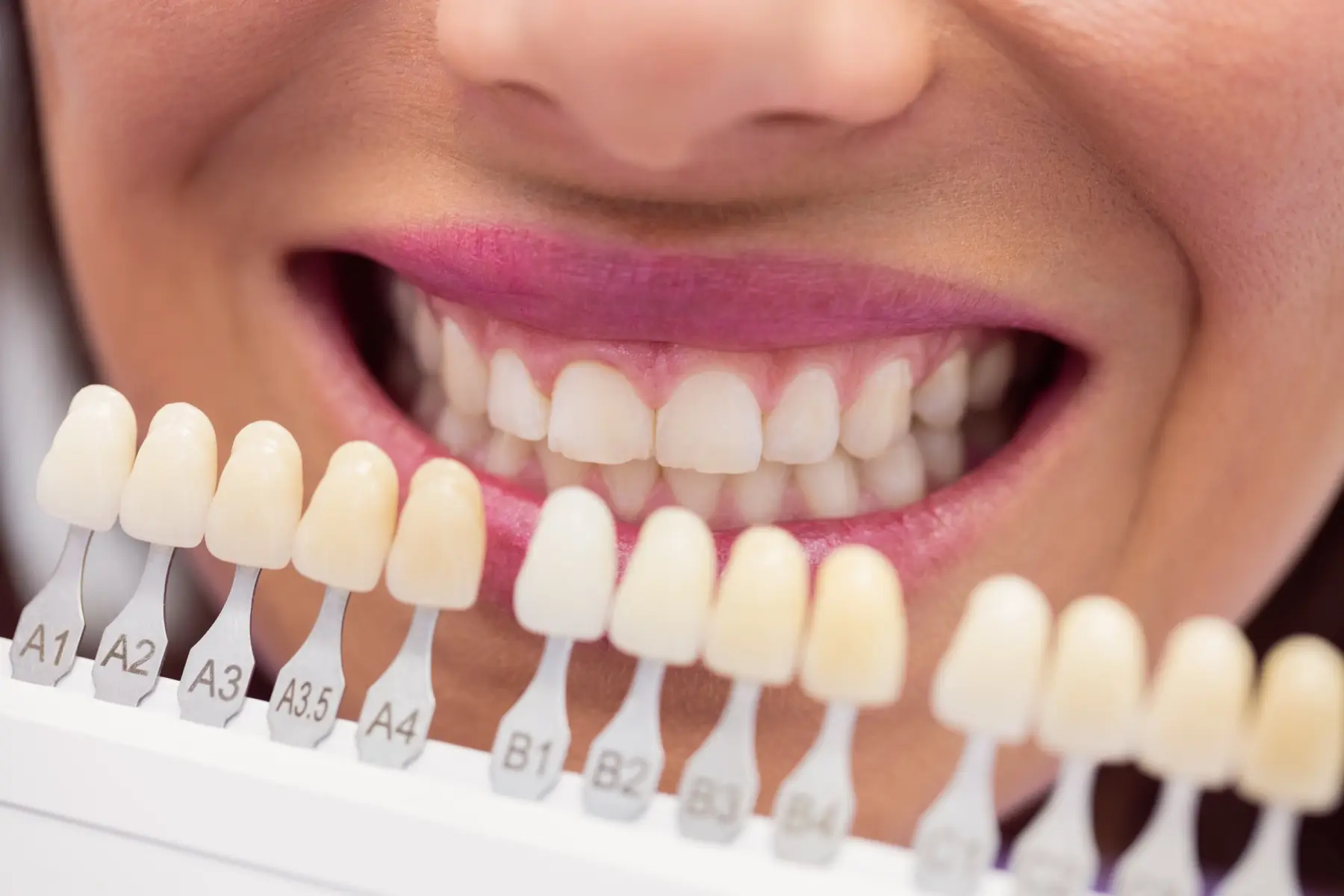
Veneers are irreversible, and the marketing skips it
This is the most important paragraph on the page. Fitting a porcelain veneer means removing a thin layer of enamel from the front of the tooth, often around 0.5 mm. Enamel does not regenerate. There is no trial period and no undo: once a tooth is prepared, it needs to be covered from then on, and the veneer itself will need replacing roughly every 10 to 15 years for the rest of your life.
That is a very different commitment from teeth whitening or a filling, and it is the part "Hollywood smile" marketing almost never states plainly. It is not a reason to avoid veneers. It is the reason to be sure before you start, especially if the teeth being shaved are otherwise healthy.
- There is no reversing it. A failed or removed veneer does not give you back your original tooth. It leaves a prepared tooth that needs a new veneer or another restoration.
- It is a lifelong maintenance cost, not a one-off. Budget for replacement across the decades, not only for the first set.
- Ask how much enamel will be removed. Minimal-prep and no-prep veneers exist for some cases and keep more of your tooth. Whether they suit you is decided by examination, not by a package tier.
- Be especially careful about treating healthy teeth. Shaving sound enamel purely for colour or shape is a bigger trade than it sounds, and a dentist who raises this is protecting you, not upselling.
The honest version: veneers are a genuinely good option for the right teeth, and a permanent alteration of healthy ones for the wrong reasons. The irreversibility is the single fact most worth sitting with before you book.
How long they last, and when they fail
The live version of this page claimed a "91% to 93%" ten-year success rate with no source. We removed it, because the published figure is both sourced and better. A 2021 systematic review in the Journal of Clinical Medicine, covering 25 studies and 6,500 porcelain laminate veneers, put the estimated 10-year cumulative survival at 95.5%. Raising a number by citing the evidence is a good position to be in, so here it is in full.
The same review breaks down what actually goes wrong, as isolated 10-year survival rates for each problem.
| Complication | 10-year survival |
|---|---|
| Fracture | 96.3% |
| Debonding (veneer comes loose) | 99.2% |
| Secondary caries (decay at the edge) | 99.3% |
| Needing root-canal treatment | 99.0% |
- Fracture is the most common failure, then debonding. In the review's own words, both happen "more commonly within the first years after PLV cementation". So "lasts ten years" is misleading: the risk is front-loaded, not spread evenly, which is exactly why the early warranty period matters.
- Design and material change the odds. The review found veneers with incisal coverage, and non-feldspathic ceramics, performed better. That is a decision your dentist makes, and it is worth asking about.
- Be sceptical of a clinic's own success percentage. If someone quotes you a precise survival figure, ask which study it comes from. The specific-sounding number, in either direction, is usually marketing rather than measurement.
- Composite is a different lifespan. Composite veneers are generally replaced sooner, roughly every 5 to 7 years, so any longevity figure only means something once you know which material it describes.
None of this makes veneers risky. Overall 10-year survival of 95.5% across 6,500 veneers is a genuinely good result. It means the useful questions are about the material, the design and the first-year warranty, not about a headline percentage.
Porcelain, composite, and why a cheap "veneer" may not be one
Two very different treatments are sold under the same word, and confusing them is the easiest way to end up comparing prices that were never comparable.
- Porcelain veneers are thin ceramic shells made in a laboratory and bonded to the tooth. They resist staining, look the most natural, and last around 10 to 15 years. E.max and zirconium are part of this porcelain family. This is what the €220 figure, and the UK and US prices above, describe.
- Composite veneers are built up from tooth-coloured resin, usually in a single chairside visit. They cost less, can often be done with less enamel removal, but stain more and typically last around 5 to 7 years. In the UK composite runs roughly £300 to £500 a tooth, in the US around $500 to $1,500.
- A very low "veneer" price is often composite. That is not a problem if it is stated. It becomes one when a composite price is set against porcelain to look like a bargain.
- Confirm the material in writing. "Veneers" on a quote is not enough. Ask specifically whether it is porcelain or composite, and which porcelain.
The rule is simple: compare porcelain with porcelain and composite with composite. Most of the "too good to be true" veneer prices online are true, and are just quietly describing a different product.
Who veneers actually suit
- Discoloration that whitening will not fix. Veneers cover stains that bleaching cannot lift, such as tetracycline staining or a single dark, non-vital front tooth.
- Chipped, worn or slightly uneven teeth. Minor chips, wear and small gaps are the classic cosmetic indication.
- Minor misalignment, not major. Small gaps and mild crookedness can be masked. Significant crowding or a bite problem is an orthodontic question first, and veneers fitted over one tend to disappoint.
- Enough healthy enamel and gums. Veneers bond to enamel and sit against the gum. Extensive decay, gum disease or too little enamel have to be treated first, not built over.
- Not a heavy grinder. Bruxism fractures veneers, which the survival data already flags as the most common failure. A night guard may be required, and sometimes veneers are simply the wrong choice.
- Realistic, and not chasing a trend. The best candidates want to fix specific teeth, not shave a healthy mouth down to a uniform white. A dentist who suggests whitening or orthodontics instead is doing their job.
A partner dentist who talks you out of veneers, or towards fewer of them, is not losing a sale by accident. For an irreversible treatment, that conversation is the most valuable part of the consultation.
The timeline
Two things run on different clocks: the trip itself is short, and the settling-in takes weeks.
- Days 1 to 2Consultation, shade and shape planning, and preparation of the teeth. Temporary veneers are usually fitted while the permanent ones are being made.
- Days 3 to 7The laboratory makes the veneers, then they are bonded and your bite is checked. This is why a stay of about 5 to 7 days is usual.
- Week 1 after fittingSensitivity to hot and cold is normal, and the gums can feel tender at the margins. Stick to a softer diet and avoid hard or chewy foods.
- Weeks 2 to 3The bite settles, sensitivity eases, and any slight change to your speech resolves as you get used to the new edges.
- Months 3 to 6The gums fully settle around the veneers. Normal eating is fine, with the sensible exception of biting directly into very hard things like ice.
- Year 1 and onThe veneers should look and feel like your own teeth. Routine check-ups, cleanings and a night guard if you grind are what carry them to and past the 10-year mark.
Flying home soon after fitting is safe: cabin pressure does not affect the bonding. Plan about 5 to 7 days in Turkey so the preparation, the laboratory work and the final check all happen before you leave.
Sources
Figures on this page that come from published research are listed here with the study they come from, so you can check them yourself.
- Long-Term Survival and Complication Rates of Porcelain Laminate Veneers in Clinical Studies: A Systematic Review. Journal of Clinical Medicine, 2021
- UrgentCare Dental (UK): porcelain veneers cost, reviewed July 2026
- Veneers Authority: national veneer cost guide, updated March 2026

What we actually do
The travel part is our job
Your surgeon handles the medicine. We handle everything around it: the dates, the hotel, the airport transfers and an interpreter who stays with you at the appointments, so nothing gets lost between languages.
Photo: Engin Yapici / Unsplash
Frequently asked questions
How do I compare veneers pricing across clinics?
Compare like with like. Check three things before you compare any two prices. First, is the price per tooth or for a full set, because a headline 'full smile' figure and a per-tooth figure are not the same number. Second, what material is quoted, since composite bonding is a different, cheaper and shorter-lived product than porcelain, and a suspiciously low 'veneer' price is often composite. Third, what the quote includes: consultation, temporaries, the fitting and any warranty may or may not be in it. A porcelain veneer through independent partner dentists in Istanbul starts from around 220 EUR per tooth.
What is the process for obtaining a personalized quote for veneers overseas?
You will usually send photos of your teeth (front and side views) and, if possible, a recent panoramic X-ray by WhatsApp or email. An independent partner dentist reviews these to estimate how many veneers are appropriate and to flag anything that needs treating first, and you receive a preliminary cost breakdown. A photo estimate is not a diagnosis: the treatment plan is only confirmed after an in-person examination.
Where can I get all-inclusive packages for veneers with hotel and transfers?
Many dental clinics in Istanbul and Antalya offer package deals aimed at international patients, bundling the treatment with hotel stays and airport and clinic transfers. Istanbul European Clinic Medical Travel Services coordinates this side of the trip with independent partner dentists: the dates, the hotel, the transfers and an interpreter. Ask for the package contents in writing, and check whether flights, temporaries and any follow-up work are included.
How do clinics handle complications if they occur after returning home?
Reputable clinics usually give a warranty on the veneers themselves, and if a veneer chips or debonds because of a lab or fitting fault they may replace it at no charge if you return. Minor adjustments are often referred to a local dentist. Because fractures and debonding are most likely in the first years after fitting, clarify the warranty length and exactly what it covers before treatment, not after.
How can international patients compare accredited clinics for veneers abroad?
Compare the materials a clinic actually uses (for example E.max or zirconium, both porcelain-family), the technology available such as CAD/CAM and digital scanning, and the experience of the dentist who will do the work. Ask for a portfolio of previous cases similar to yours, and confirm which named dentist carries out the treatment rather than the clinic as a brand.
How can I verify clinic accreditations and patient reviews before traveling for surgery?
Check for Turkish Ministry of Health authorisation and any ISO or JCI accreditation, and cross-reference the claim against the accrediting body's own directory rather than trusting a logo on a website. For reviews, read independent platforms such as Google Reviews and Trustpilot, and weight recent, detailed accounts over a wall of five-star one-liners.
What are the safest ways to arrange a medical trip for veneers in Turkey?
Book through a medical travel coordinator or a clinic with a dedicated international-patient department that gives you a clear written plan, names the treating dentist, and helps with transfers and accommodation. Verify the dentist's registration, get the treatment plan and costs in writing, and make sure you know who to contact if something needs attention after you fly home.
How long do veneers from Turkey typically last?
Porcelain veneers typically last around 10 to 15 years, and a 2021 systematic review of 6,500 porcelain laminate veneers put the estimated 10-year survival at 95.5%. Composite veneers are a different product and last less, roughly 5 to 7 years. Longevity depends heavily on your bite, whether you grind your teeth, and day-to-day oral hygiene.
Do I have to shave my natural teeth for veneers in Turkey?
Usually yes. For porcelain veneers a thin layer of enamel, often around 0.5 mm, is removed so the veneer sits flush and does not look bulky. This is permanent: enamel does not grow back, so once teeth are prepared you are committed to wearing veneers and replacing them over time. Minimal-prep or no-prep options exist for some cases, but not all, and only an in-person exam can tell you which applies.
What is included in an all-inclusive veneers package in Turkey?
Packages usually cover the procedure, consultation and X-rays, airport and clinic transfers, and hotel accommodation. Flights are normally not included. Get the contents in writing and check specifically whether temporaries, the final fitting, and any warranty replacement are part of the price or billed separately.
Is it safe to fly back to home immediately after getting veneers?
Yes. Cabin pressure does not affect the veneers or the bonding, so flying home soon after fitting is fine. The more useful reason to build in a little time is to attend the final check and to raise any bite or sensitivity issues while you are still in the same city as the dentist who did the work.
How long do I need to stay in Turkey for the veneer procedure?
Plan roughly 5 to 7 days. That allows time for the consultation and tooth preparation, laboratory fabrication of the veneers, and the final bonding and a check before you fly. If you want temporaries adjusted or the shade reviewed, staying at the longer end of that range gives you room.
Is it safe to get veneers in Turkey?
It can be, if you choose a properly authorised clinic and a registered dentist and go in understanding that veneers are irreversible. Turkey regulates medical tourism through the Ministry of Health, but regulation does not remove the two real risks: over-preparing healthy teeth, and having more veneers fitted than the case needs. Both are decisions made in the chair, so the dentist matters more than the country.
Why do people go to turkey for veneers?
Mainly price. A porcelain veneer starts from around 220 EUR per tooth in Turkey against roughly 700 to 1,000 GBP per tooth in the UK, and many people combine the trip with a stay in Istanbul. The saving is real, but it applies to the same product only if the Turkish quote is also porcelain and not composite, so compare like with like.
How much are porcelain veneers in Turkey?
Porcelain veneers start from around 220 EUR per tooth through independent partner dentists in Istanbul. Porcelain is more stain-resistant and longer-lasting than composite, and E.max and zirconium are part of the same porcelain family. The per-tooth figure, not a bundled 'full smile' headline, is the number to compare against prices at home.
How much is a full set of veneers in turkey?
It depends on how many teeth are treated. A visible 'full set' is usually 16 to 20 teeth across the smile line, which at around 220 EUR per porcelain tooth comes to roughly 3,500 to 4,400 EUR, before any hotel and transfer package. A single arch of 8 to 10 teeth is about half that. Ask whether the quote is per tooth or for the set.
Why are veneers cheaper in turkey?
Lower running costs, lower wages and a favourable exchange rate, not lower-grade materials. Reputable Turkish clinics use the same global porcelain brands as clinics in the UK and US. The one caveat is that an unusually low 'veneer' price is sometimes composite bonding rather than porcelain, which is genuinely a cheaper product, so confirm the material.
How much does it cost to get veneers in turkey?
The total depends on the number of teeth. A porcelain veneer starts from around 220 EUR per tooth, so a single tooth is about 220 EUR and a 20-tooth smile makeover is around 4,400 EUR before any accommodation and transfer package. Composite bonding is cheaper per tooth but is a different, shorter-lived treatment.
How much are veneers in turkey?
Porcelain veneers start from around 220 EUR per tooth. Composite veneers are cheaper per tooth but are a separate product with a shorter lifespan, so a very low 'veneer' price usually means composite. E.max, zirconium and laminate porcelain sit in the porcelain price range.
What's the cheapest country to get veneers?
Turkey is among the most affordable countries for porcelain veneers, driven by lower labour and running costs rather than lower standards. That said, 'cheapest' is the wrong test for an irreversible treatment: the dentist's judgement about how much tooth to remove and how many veneers you actually need matters far more than shaving a little off the price.
How long do turkey veneers last?
With good oral hygiene, porcelain veneers from Turkey typically last 10 to 15 years, in line with global figures, and published data puts 10-year survival at about 95.5%. When they do fail it is usually a fracture or debonding, and both are most common in the first years after fitting rather than spread evenly, which is why the early warranty period matters.
Are Turkish veneers good?
They can be very good when done by a reputable dentist, and clinics often use the same premium brands, such as Ivoclar Vivadent, used in the UK and US. Quality tracks the dentist and the material, not the country. The failure modes to ask about are over-preparation of the teeth and fractures in the first years, both of which come down to how the work is done.
How much do veneers cost in Turkey?
Porcelain veneers cost from around 220 EUR per tooth, depending on the material (porcelain, E.max or zirconium) and the clinic. That compares with roughly 700 to 1,000 GBP per tooth in the UK and 900 to 2,500 USD in the US. Composite veneers are cheaper but are a different product with a shorter lifespan.