
Dental · coordinated in Istanbul
All-on-6 dental implants in Turkey
All-on-6 replaces a whole jaw of teeth on six implants, with a fixed bridge of 10 to 14 teeth attached to them. The two extra implants, compared with All-on-4, spread the biting load across more anchor points, and they suit a jaw with enough healthy bone to place them. It is a full-arch reconstruction, fixed and not removable, and the decision that matters most is not the brand of implant but whether six is actually the right number for your jaw.
Istanbul European Clinic Medical Travel Services is a medical travel coordination company in Istanbul: we work with independent partner dentists who treat you at their own clinics or at accredited hospitals. A bilingual coordinator handles your dates, hotel, transfers and interpreting, while every clinical decision, including whether six implants or four suit your bone, is made independently by your chosen partner dentist. Istanbul European Clinic does not perform treatment and does not guarantee outcomes.
An independent partner dentist checked the medical claims on this page. What applies to your own case is decided by the dentist who examines you.
How much does All-on-6 cost in Turkey?
Through our partner clinics an All-on-6 arch starts from €5,400, a little more than All-on-4 for the two extra implants. That is one jaw and the surgical stage; the permanent bridge fitted months later can be a separate cost.
| Where | One arch | What to check |
|---|---|---|
| Turkey, partner clinics | from €5,400 | Six implants, surgery, temporary bridge. Confirm the permanent bridge and its material |
| United Kingdom | £12,000 – £25,000 | Usually the finished arch; a bone graft, if needed, is extra |
| United States | $15,000 – $25,000 | Acrylic bridge; a zirconia arch runs $25,000 – $38,000 |
The UK and US figures are 2026 clinic pricing for a finished full arch, broadly the same as All-on-4 with a little added for two more implants. The Turkish figure is the surgical stage. The trap the UK and US sources both flag is a headline price that covers only the temporary acrylic arch and bills the permanent bridge, sedation or extractions separately, so ask every clinic whether the final fitted bridge is included and in which material.
All-on-6 or All-on-4? The honest answer
This is the real question on this page, and the honest answer is that more implants is not automatically better. It depends on your bone.
- All-on-6 spreads the load across six points and suits a jaw with enough healthy bone to place them. That can be an advantage where the bone is there.
- All-on-4 is designed for less bone. It angles the rear implants to make the most of what you have and often avoids a graft. For a reduced jaw, choosing All-on-6 can mean a bone graft first that All-on-4 would have skipped.
- So the choice is a trade-off, not an upgrade. More implants versus more surgery, decided by your bone volume on a scan, not by which package tier costs more. A clinic that pushes six implants on every jaw is selling, not assessing.
- The survival evidence does not crown a winner. Full-arch implant survival is high either way; what changes the odds is your bone, your jaw (upper is harder than lower), and whether you smoke, far more than four versus six.
If a partner dentist recommends All-on-4 after seeing your scan, that is not a downgrade. It is often the less invasive route to the same fixed teeth, and it is a good sign they are reading your case rather than your budget.
How long All-on-6 lasts
The implants have a strong long-term record. In a study of 561 patients followed for up to 17 years, cumulative implant survival was 97.4% in the upper jaw and 98.9% in the lower jaw, with the upper jaw carrying the higher risk of failure.
- Survival means the implants stay in, not that nothing ever needs attention. The bridge on top wears and is expected to be renewed over the years even when the implants are perfectly sound. Budget for it.
- Smoking moves the number, 97.9% in smokers versus 99.2% in non-smokers over that long follow-up. It is one of the few risk factors entirely in your control.
- The 20-year context. A 2024 meta-analysis found roughly four in five dental implants still in place at 20 years once patients lost to follow-up are counted. Full-arch work lives within that same reality, and a flat "over 95% forever" claim is a short-term number dressed as a lifetime one.
The live version of this page (which was published in the wrong language) claimed a success rate "above 95%" with no source. The figures here are sourced, jaw-specific, and measured over real years.
What the process looks like
- The surgical visitAbout a week in Turkey. The six implants are placed, a temporary fixed bridge goes on the same day or soon after where the bone allows, and you fly home with working teeth while healing happens underneath.
- Week 1Swelling and bruising peak around day three and settle by the end of the week. Soft diet, careful hygiene, and the temporary bridge in use.
- Months 3 to 6Osseointegration: the six implants fuse with the jawbone. The long-term survival depends on this healing, and it cannot be hurried.
- The permanent bridgeOnce healed, the temporary bridge is replaced with the permanent one, either on a second trip to Turkey or arranged closer to home. Decide which at the start, because it shapes the total cost and effort.
Plan the flight home for the far end of the surgical week: expert guidance is at least 72 hours after implant surgery, ideally a week. Hydrate and move on the flight, and follow your dentist’s advice. Most important: know before you travel whether the permanent bridge is included and where it will be fitted.
Sources
Figures on this page that come from published research are listed here with the study they come from, so you can check them yourself.
- The All-on-4 concept for fixed full-arch rehabilitation: longitudinal study with 3-17 year follow-up. International Journal of Implant Dentistry, 2023
- How far can we go? A 20-year meta-analysis of dental implant survival rates. Clinical Oral Investigations, 2024
- Dental tourism and the risk of barotrauma and barodontalgia. British Dental Journal, 2023
What we actually do
The travel part is our job
Your surgeon handles the medicine. We handle everything around it: the dates, the hotel, the airport transfers and an interpreter who stays with you at the appointments, so nothing gets lost between languages.
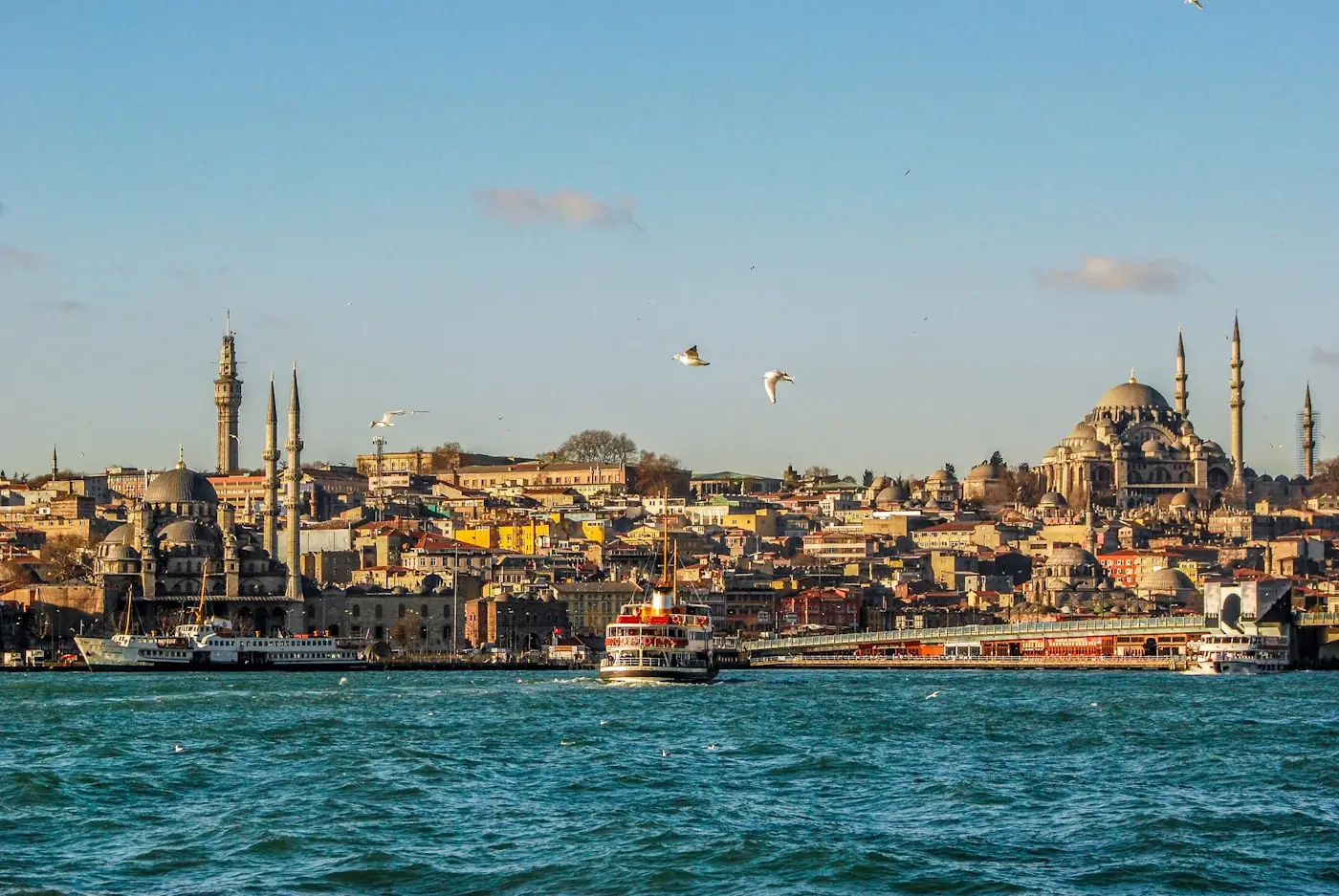
Photo: Engin Yapici / Unsplash
Frequently asked questions
How much does All-on-6 cost in Turkey?
Through our partner clinics an All-on-6 arch starts from €5,400, a little more than All-on-4 because of the two extra implants. That covers the six implants, the surgery and a temporary bridge, with the permanent bridge fitted after healing. In the UK the finished arch runs roughly £12,000 to £25,000 and in the US $15,000 to $25,000 for an acrylic bridge, more for zirconia. As with any full-arch quote, the figure that matters is the one that includes the permanent bridge, so ask what is and is not in the price.
What is All-on-6?
It replaces a full arch of teeth on six implants instead of four, with a fixed bridge of 10 to 14 teeth attached to them. The extra two implants spread the biting load across more anchor points, which can suit a jaw that has enough bone to place them. Like All-on-4, the bridge is fixed and not removable, and it replaces a whole jaw rather than individual teeth.
Is All-on-6 better than All-on-4?
Not automatically, and any clinic that says so is selling a tier rather than reading your jaw. Six implants spread the load across more points and can be the right choice where there is enough bone. But All-on-4 is specifically designed to work with less bone and often avoid a graft, so for some jaws four is the better, less invasive answer. The correct number is a clinical decision based on your bone volume and quality, not an upgrade you pick from a menu. A good surgeon recommends what your jaw needs.
Do I need more bone for All-on-6 than All-on-4?
Generally yes. Placing six implants needs enough healthy bone in the right positions, whereas All-on-4 is designed to make the most of limited bone by angling the rear implants. If your bone is reduced, choosing All-on-6 may mean a bone graft first that All-on-4 would have avoided. That trade-off, more implants versus more surgery, is exactly what your assessment is for.
How long do All-on-6 implants last?
Full-arch implants have a strong long-term record. In a study of 561 patients followed up to 17 years, cumulative implant survival was 97.4% in the upper jaw and 98.9% in the lower jaw. The same two honest points apply as for any full arch: the upper jaw carried a higher risk of failure, and the bridge on top is a separate component expected to be renewed over the years even when the implants are fine.
Does smoking affect All-on-6?
Yes, measurably. In that long-term study implant survival was 97.9% in smokers versus 99.2% in non-smokers. Over a full-arch reconstruction you intend to keep for decades, that gap is worth taking seriously, and it is why surgeons ask you to stop before and after surgery.
Who is a good candidate for All-on-6?
Someone missing most or all teeth in a jaw, or with failing teeth needing extraction, who has enough bone to support six implants, or is willing to have a graft to create it. Good general health, healthy healing and being a non-smoker (or willing to stop) all matter. If your bone is limited and you would rather avoid grafting, your surgeon may recommend All-on-4 instead, and that is a sound answer rather than a lesser one.
How safe is All-on-6?
It is a routine, well-documented full-arch procedure with high implant survival. The risks are those of any implant surgery: swelling and bruising for a week, minor bleeding on the first day, and rarely infection or temporary numbness of the lip or chin. Implant failure is uncommon and linked to smoking, poor bone and infection rather than to the number of implants. Patient selection matters more than the technique label.
How long do I stay in Turkey for All-on-6?
Usually about a week for the surgical stage: the six implants are placed, a temporary fixed bridge goes on, and you fly home to heal. The permanent bridge is fitted after 3 to 6 months of osseointegration, which means a second trip or arranging that final stage closer to home. Settle which before you book, because it changes the total cost and effort.
What is included in an All-on-6 package?
Typically the six implants, the surgery, a temporary bridge, and often hotel, transfers and interpreting. Pin down in writing whether the permanent bridge and its material are included or billed later, and whether the second visit to fit it is part of the price. Those are the biggest hidden costs in any full-arch treatment, All-on-4 or All-on-6.
What are the side effects and risks?
Swelling and bruising around the jaw and cheeks, peaking around day three and settling within a week; minor bleeding in the first 24 hours; manageable pain; and, less often, infection if hygiene instructions are not followed. Rare risks include temporary numbness of the lip or chin and implant failure, the latter tied to smoking, poor bone and infection.
How do I compare All-on-6 pricing across clinics?
Compare the finished result, not the headline. Does the quote include the permanent bridge as well as the six implants, in which material, and the fitting visit? One arch or two? A clinic quoting only the implants and a temporary bridge looks cheaper than one quoting the fitted arch while delivering less. And be clear whether you are comparing an All-on-6 quote with another All-on-6, not with an All-on-4.
Why are dental implants cheaper in Turkey?
Lower cost of living, lower salaries and a favourable exchange rate, the same reasons across Turkish medical travel, not a discount on the implant brand or the surgeon's training. A very low quote usually cuts the permanent bridge material or the second-stage visit, so read what is included rather than the headline figure.
What are the risks of a long flight afterwards?
Mainly deep vein thrombosis from sitting still, as with any surgery followed by a flight. Stay hydrated, move and walk the cabin, and follow your surgeon's advice. The flight does not threaten the implants once the surgical site is stable, but do not travel before your surgeon confirms it is safe. Expert guidance is to wait at least 72 hours after implant surgery before flying, ideally a week, and at least two weeks after a sinus lift.
How do I get a personalised All-on-6 quote?
Send recent dental X-rays or a CT scan and a brief history. An independent partner surgeon reviews your bone and proposes a plan and price, including whether six implants or four actually suit your jaw. Treat the remote review as a screening step: your bone is properly assessed in person, and the plan can change after that examination.
What is the safest way to arrange the trip?
Either book directly with an accredited clinic or work through a medical travel coordinator that is clear about what it is. Istanbul European Clinic Medical Travel Services is a coordination company: we arrange travel, accommodation, transfers and interpreting and introduce you to independent partner dentists who assess your case and carry clinical responsibility for it. We do not perform treatment and we do not employ the dentists. Whichever route you take, agree the plan for your permanent bridge before you fly.