
Orthopaedics · coordinated in Istanbul
Orthopedic surgery in Turkey
Orthopedic surgery is not one operation but a whole category, from a day-case knee arthroscopy to a major hip or knee replacement, and cost, recovery and risk change completely depending on which one you need. This page is about the joint replacements most people travel for, and about the part of the journey that decides the result: the months of rehabilitation that happen after you fly home.
Istanbul European Clinic Medical Travel Services is a medical travel coordination company in Istanbul: we work with independent partner orthopaedic surgeons who operate at their own clinics or at accredited hospitals. A bilingual coordinator handles your dates, hotel, transfers and interpreting, while every clinical decision, from whether surgery is right for you to which implant is used, is made independently by your chosen partner surgeon. Istanbul European Clinic does not perform surgery, does not employ surgeons and does not own hospitals.

An independent partner surgeon checked the medical claims on this page. What applies to your own case is decided by the surgeon who examines you.
How much does orthopedic surgery cost in Turkey?
There is no single price, because "orthopedic surgery" covers operations that differ by a factor of ten. The two most people travel for are joint replacements, so here are those, with an honest label on the numbers.
| Procedure | Turkey (market estimate) | United Kingdom (private) |
|---|---|---|
| Knee replacement | €6,000 – €10,000 | £16,914 guide price, all-in |
| Hip replacement | €7,000 – €12,400 | £16,579 guide price, all-in |
The Turkish figures are a market estimate, not our own price list: Istanbul European Clinic is a coordination company and does not set surgeon fees, so treat them as a starting point and ask your partner surgeon for an itemised written quote. The UK figures are Nuffield Health guide prices for the whole private package; the NHS provides the same surgery free, but with a waiting list. What moves the price most is the implant brand, which is also the first thing a very low quote quietly downgrades.
How long a joint replacement actually lasts
This is the number that matters, and it does not come from a clinic brochure. It comes from national joint registries that track hundreds of thousands of operations for decades. A 2019 review in The Lancet pooled that data.
| Joint | Still working at 25 years | Based on |
|---|---|---|
| Total knee replacement | about 82% | 299,291 knees, 14 registries |
| Total hip replacement | about 58% | 215,676 hips, national registries |
- Why the hip number looks lower. It reflects implants fitted decades ago and followed all the way out to 25 years. Modern bearing surfaces are expected to last longer, but the figure above is the one that is actually verified, so treat it as a floor rather than a forecast.
- Survival means the implant stays in, not that the joint is perfect. A replaced knee can still be stiff, click, or make kneeling uncomfortable for good. Registry survival and day-to-day satisfaction are two different measurements.
- Younger and more active means more wear. The same implant lasts less time in a 55-year-old who runs than in an 80-year-old who walks, because it is used harder. If you are young for a replacement, ask your surgeon directly about the likelihood of a revision later.
The live version of this page claimed a success rate "comparable to leading Western clinics" with nothing behind it. We took it out. The registry figures above are less flattering and far more useful, because they are what the evidence actually supports.
The part nobody puts in the package: rehabilitation
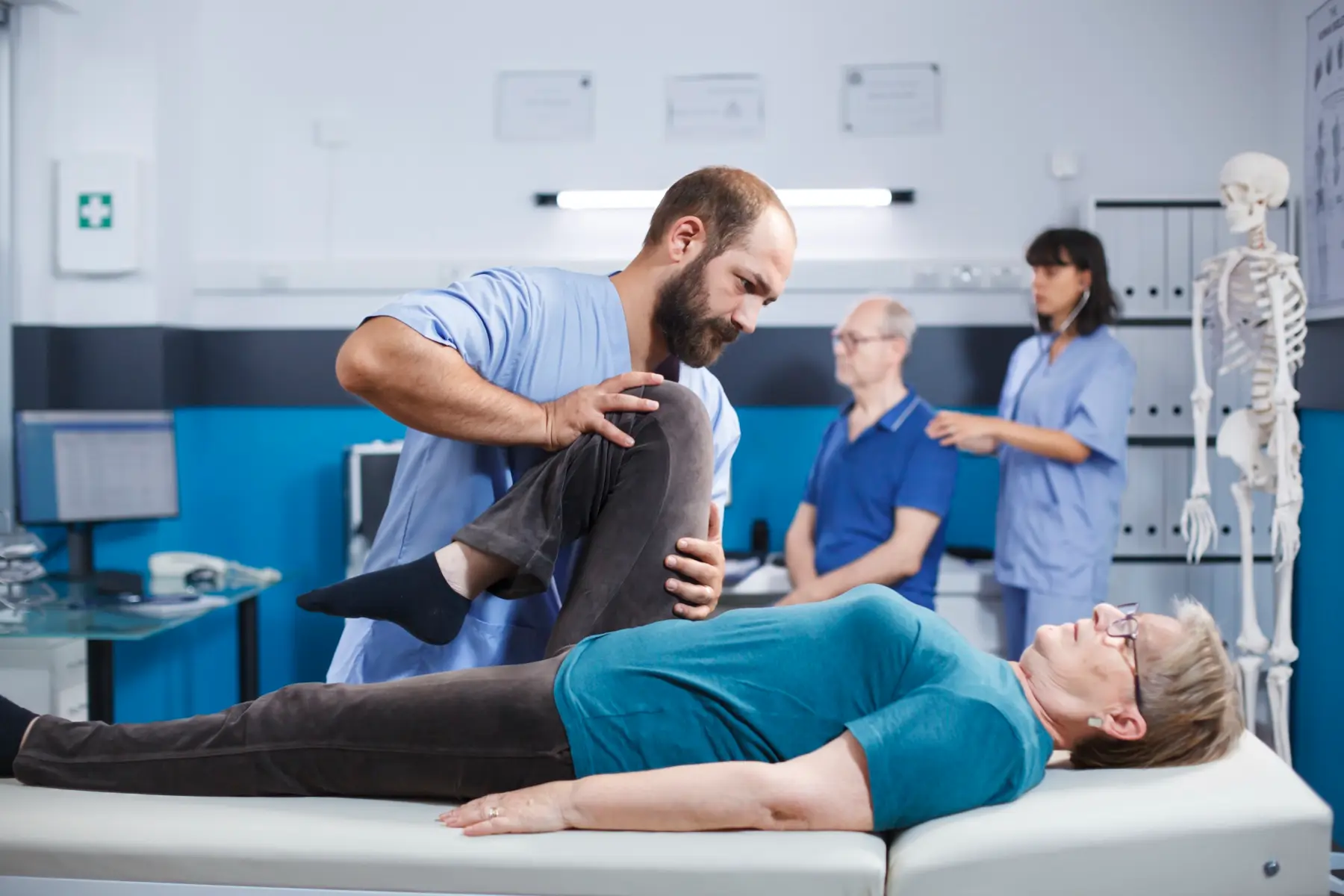
The operation takes a couple of hours. The result takes months, and it is made almost entirely of physiotherapy. This is the single biggest thing to understand about having orthopedic surgery abroad, because the surgery happens in Istanbul and the recovery happens at home.
- You fly home mid-recovery. A 7 to 14 day stay covers the surgery, the first dressings and the earliest physiotherapy. Everything after that, the part that determines your range of motion and strength, you do in your own country.
- Arrange your onward physiotherapy before you travel. Know who will supervise it and what it costs at home. A joint replacement without diligent rehab is a worse outcome than the same operation with it, regardless of how good the surgeon was.
- Build the gap into the plan. If continuity of physiotherapy is going to be difficult where you live, that is a reason to think hard about travelling for this particular operation, and an honest coordinator should raise it rather than gloss over it.
Who is a realistic candidate
- Conservative treatment has been tried. Joint replacement is usually the step after physiotherapy, medication and injections stop controlling the pain, not the first move. A surgeon who reaches for it immediately is worth a second opinion.
- The pain and the imaging agree. Surgery treats a joint whose damage on the scan matches the pain you feel. Operating on a mismatch is how people end up no better afterwards.
- Fit enough for the anaesthetic and the recovery. Heart, lung and clotting conditions all change the calculation and must be declared. So does anything that thins your blood.
- Able to commit to months of physiotherapy. This is a candidacy criterion, not an afterthought, because the rehab is not optional and it is not short.
- Realistic about the result. A replaced joint is a very good artificial joint, not a new natural one. The goal is to end the pain and restore function, not to feel 25 again.
A partner surgeon who tells you it is too early, or that you are not a good candidate yet, is doing their job. That answer is worth more than a fast yes.
What the timeline looks like
- Days 1 to 5In hospital. Pain control, and physiotherapy starts almost immediately: standing and taking first steps within a day or two of a joint replacement is normal and deliberate, not rushed.
- Days 5 to 14Out of hospital, still in Turkey. Wound checks, suture removal, and the first structured physiotherapy sessions. Your surgeon confirms when it is safe to fly.
- Weeks 2 to 12Home, and this is the real work: near-daily physiotherapy to rebuild range of motion and strength. Progress is gradual and occasionally frustrating, and this is the normal course.
- Months 3 to 12Function keeps improving well beyond the point most people expect. Many are back to unrestricted daily activity, with the surgeon setting the limits based on how the joint is doing, not a generic schedule.
Plan the flight home for the far end of the 7 to 14 day window, wear compression stockings, move on the flight, and take any blood thinner exactly as prescribed. A long-haul flight too soon after joint surgery is a deep vein thrombosis risk, not just a discomfort.
Sources
Figures on this page that come from published research are listed here with the study they come from, so you can check them yourself.
- How long does a knee replacement last? A systematic review and meta-analysis of registry reports with 15+ years of follow-up. The Lancet, 2019
- How long does a hip replacement last? A systematic review and meta-analysis of registry reports with 15+ years of follow-up. The Lancet, 2019
- Nuffield Health (UK): knee and hip replacement guide prices, 2026
- Turkey orthopaedic market price range (aggregator data, not the IEC partner price list; to be confirmed)

What we actually do
The travel part is our job
Your surgeon handles the medicine. We handle everything around it: the dates, the hotel, the airport transfers and an interpreter who stays with you at the appointments, so nothing gets lost between languages.
Photo: Engin Yapici / Unsplash
Frequently asked questions
How much does orthopedic surgery cost in Turkey?
It depends entirely on the procedure, so a single number would be misleading. As a rough market guide, a knee replacement runs around €6,000 to €10,000 and a hip replacement around €7,000 to €12,400, against a private guide price of about £16,914 for a knee and £16,579 for a hip at a UK hospital. Those Turkish figures are a market estimate, not our own price list: Istanbul European Clinic is a coordination company and does not set surgeon fees. Ask for an itemised written quote before you travel, and check that it names the implant brand.
How long do knee and hip replacements actually last?
This is the number worth knowing, and it comes from national joint registries covering hundreds of thousands of operations. A 2019 review in The Lancet found that about 82% of total knee replacements last 25 years (from 299,291 knees), and around 58% of hip replacements last 25 years (from 215,676 hips). The hip figure looks lower because it reflects older implants followed for decades; modern bearing surfaces are expected to do better, but the honest, verifiable number is the one above. One caveat: this measures the implant staying in place, not the joint being trouble-free.
Is knee or hip replacement in Turkey safe for international patients?
It can be, and the deciding factors are the surgeon and the hospital, not the country. Look for a JCI-accredited hospital and a surgeon whose licence you can verify. The specific risk for international patients is not the operation itself but what happens after: orthopedic recovery depends on months of physiotherapy, and you will be doing most of it at home. Safe means planning that continuity before you fly, not just choosing a good operating theatre.
What is the biggest complaint after knee replacement?
Stiffness and lingering pain in the first months, and it is usually not a sign that anything went wrong. A new knee is not a return to a natural knee: it can feel tight, it may click, and kneeling is often uncomfortable long-term. The patients who do best are the ones who were told this honestly beforehand and who kept up their physiotherapy, which is the single biggest factor in the result.
How long should I stay in Turkey for surgery and physiotherapy?
Most patients stay 7 to 14 days: the surgery, the initial hospital recovery, suture removal, and the first sessions of physiotherapy before flying home. That is only the beginning of rehabilitation, not the whole of it. The bulk of your recovery happens over the following months at home, so arrange your onward physiotherapy before you leave rather than after you land.
What are the common risks of a long flight after orthopedic surgery?
Deep vein thrombosis (DVT) is the main one, because orthopedic patients are already less mobile and a long flight adds hours of sitting still. Wear compression stockings, keep hydrated, move your feet and walk the aisle regularly, and take any blood thinner your surgeon prescribes exactly as directed. Do not book the flight home before your surgeon has confirmed it is safe for you to take it.
What is included in an all-inclusive orthopedic package in Turkey?
A typical package covers the surgery, the hospital stay, the surgeon's fee, pre-op tests, airport transfers, hotel accommodation and interpreting. Two things to pin down in writing: which implant brand is included (this is the largest single cost and where corners get cut), and how many physiotherapy sessions are covered before you fly. Flights are usually not included.
How do I compare orthopedic pricing across clinics?
Compare like for like. Check whether the quote names the implant brand, how many nights in hospital it covers, and whether medication and physiotherapy are included. An unusually low price often excludes the implant tier or the rehabilitation, which are exactly the parts that determine your result. The cheapest quote and the best value are rarely the same quote.
How do I verify a surgeon's credentials and hospital accreditation?
Verify the surgeon's licence through the Turkish Medical Association and ask for evidence of membership in orthopedic societies. For the hospital, look for JCI accreditation and confirm it on the Joint Commission International database rather than taking a logo on a website at face value. For patient experience, prefer third-party review platforms and detailed accounts over a gallery the clinic curates itself.
How are complications handled after I return home?
A reputable partner surgeon provides remote aftercare and will coordinate with your local doctor if something arises. Because orthopedic recovery is long, agree in advance what happens if you need follow-up imaging, a revision, or extended physiotherapy, and check whether your travel insurance covers complications of elective surgery abroad, as many policies exclude them.
How do medical travel packages bundle accommodation and transport?
Most include a stay in a hotel near the hospital and transfers between the airport, hotel and clinic, with extra nights available if your recovery needs them. Istanbul European Clinic Medical Travel Services arranges this side of the trip around the surgeon you choose. The logistics are the straightforward part of this decision; the surgeon and the rehabilitation plan are the parts that decide the outcome.
How do I get a personalised quote for orthopedic surgery abroad?
Send your recent X-rays or MRI scans and a brief medical history. An independent partner surgeon reviews them and sets out what they would do and what it would cost. Treat a remote review as a screening step, not a diagnosis: the surgeon examines you in person before anything is confirmed, and may revise the plan or advise against surgery at that point.
What is orthopedic surgery?
It is the branch of medicine that treats the musculoskeletal system surgically: bones, joints, ligaments, tendons and muscles. In practice it covers a wide range of very different operations, from a day-case knee arthroscopy to a major joint replacement, which is exactly why cost, recovery and risk vary so much across this category.
Does an orthopedic doctor treat arthritis?
Yes. Orthopedic doctors manage arthritis with non-surgical options first, such as physiotherapy, medication and injections, and turn to surgery like joint replacement only when conservative treatment stops controlling the pain and the joint damage is advanced. A good surgeon will tell you when it is too early to operate.
What does an orthopedic doctor specialise in?
The diagnosis, treatment and rehabilitation of the musculoskeletal system. Within orthopedics surgeons often sub-specialise, in joints, spine, hand, foot and ankle, or sports injuries, so part of choosing well is matching the surgeon's sub-specialty to your specific problem rather than picking a generalist for a complex case.
Which hospitals in Turkey are best for joint replacement?
The ones to shortlist are JCI-accredited, have a dedicated orthopedic department, and can show you their infection and revision rates. Istanbul European Clinic Medical Travel Services works with independent partner surgeons who operate at accredited hospitals, but we do not own or run any hospital, and the right facility for you is the one that fits your specific procedure and surgeon, which is a decision your surgeon leads.
Why is orthopedic surgery cheaper in Turkey?
Lower cost of living, lower salaries, and a favourable exchange rate, the same reasons that apply across Turkish medical travel. It is not a discount on the implant or the surgeon's training. The figure to watch is not how low a quote is but what it leaves out: a price well below the market range usually means a cheaper implant tier or rehabilitation billed separately later.
Is Turkey a good place for medical treatment?
Turkey has modern hospital infrastructure, internationally trained surgeons and a large number of JCI-accredited facilities, and it also has a wide spread in quality, as any large medical travel market does. It is a good place to have surgery if you choose carefully; the country reputation does the first 10% of the work and your own due diligence does the rest.
Which country is best for orthopedic surgery?
There is no single best country, and any page that names one is usually selling it. Germany, the United States and Turkey all have excellent orthopedic surgeons; they differ mainly in cost and waiting times. The better question is which surgeon and which hospital, because outcomes vary far more between individual surgeons than between countries.
How safe is the anaesthesia for a joint replacement?
Joint replacements are done under general or spinal anaesthesia, both routine for this surgery, and the anaesthetist assesses your fitness beforehand. Declare everything at that assessment, including heart, lung and clotting conditions and any blood-thinning medication, because that conversation is where the real safety margin is set. An honest team may delay or decline surgery on the basis of it, and that is the system working.