
Plastic surgery · coordinated in Istanbul
Brazilian butt lift in Turkey
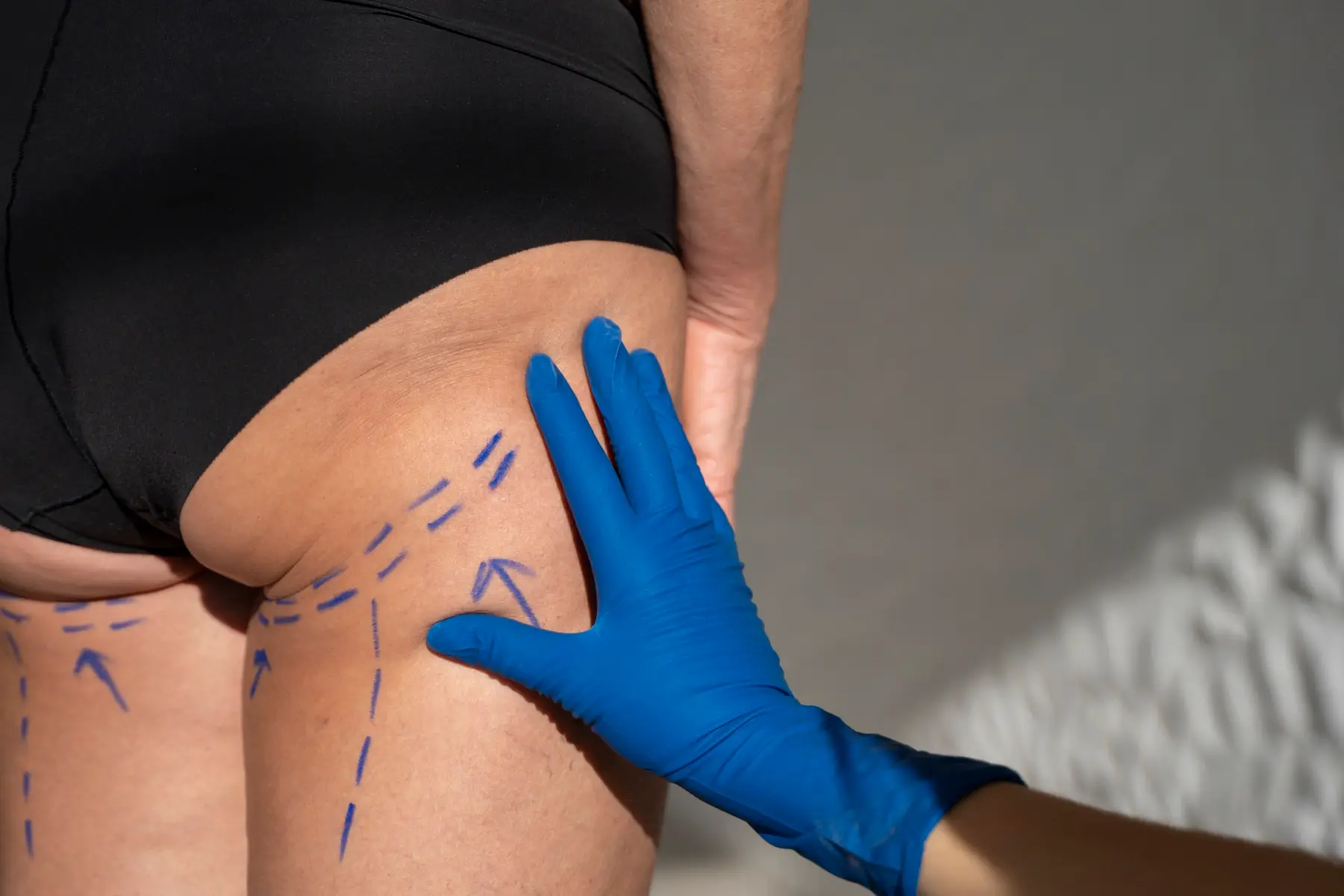
A Brazilian butt lift takes fat from somewhere you would rather not have it, usually the abdomen, flanks or thighs, and transfers it into the buttocks. A large part of the result comes from the liposuction rather than from the volume that goes in: what changes the silhouette is the waist narrowing at the same time. It is one operation of 2 to 4 hours, followed by a recovery in which you cannot sit normally for weeks.
Istanbul European Clinic Medical Travel Services is a medical travel coordination company in Istanbul: we work with independent partner plastic surgeons who operate at their own clinics or at accredited hospitals. A bilingual coordinator handles your dates, hotel, transfers and interpreting, while every clinical decision, starting with whether you should have this operation at all, is made independently by your chosen partner surgeon. Istanbul European Clinic does not perform surgery and does not guarantee outcomes.

An independent partner surgeon checked the medical claims on this page. What applies to your own case is decided by the surgeon who examines you.
Last reviewed 16 September 2026How much does a BBL cost in Turkey?
A Brazilian butt lift coordinated through our partner surgeons in Istanbul starts from €2,850. Below is what the same operation costs in the UK and the United States, and the reason the three numbers are in three different currencies is that they are not measuring the same thing.
| Where | Typical cost | What that figure covers |
|---|---|---|
| Turkey, partner surgeons | from €2,850 | Surgery, anaesthesia, hospital stay, transfers |
| United Kingdom | from £6,500 | All-in: surgeon, anaesthetist, theatre, both stages of the operation, follow-ups. Garment and medication extra |
| United States | $7,264 | The surgeon's fee only. Anaesthesia, facility and medication are all on top |
Read that third column before you compare the numbers. The US figure is the American Society of Plastic Surgeons' published average surgeon fee for 2023, and ASPS states plainly that it "does not include anesthesia, operating room facilities or other related expenses", so the real American total is higher than $7,264 and the society does not publish by how much. The UK figure is a London price for the whole package. Anyone showing you a tidy table of three totals is comparing things that were never the same measurement.
What moves the price, and what should worry you
- How many areas are liposuctioned. The fat has to be harvested from somewhere, and each area adds operating time. This is the single biggest legitimate variable.
- What the quote actually contains. Hospital stay, pre-op tests, medication, compression garment, transfers. Ask for the list in writing, and ask specifically whether a revision would be included or charged.
- Whether it is a primary or a revision BBL. Correcting someone else's result is a harder operation and costs more, everywhere.
- What should worry you is the bottom of the market, not the top. A price far below the figure above is not a discount on the same operation. The next two sections are about why that sentence is a safety point and not a sales line.
The safety data, with the actual numbers
BBL is the cosmetic operation with the most serious documented safety record, and you should know why before you choose anything else about it. The risk is pulmonary fat embolism: the cannula injecting the fat enters one of the large veins in the buttock, fat is pushed into the bloodstream, and it travels to the lungs.
The figures below come from a survey of 692 surgeons covering 198,857 gluteal fat grafting cases, and from a 2024 review of the gluteal fat embolism cases published in the literature.
| Outcome | Published rate |
|---|---|
| Pulmonary fat embolism, any | 1 in 1,030 (under 0.08%) |
| Fatal pulmonary fat embolism | 1 in 3,448 |
| Non-fatal pulmonary fat embolism | 1 in 1,449 |
| Complications overall | 7 – 10% |
| Serious complications | under 1% |
- Rare is not the same as survivable. The event is uncommon, but in the 2024 review of published gluteal cases where pulmonary fat embolism did occur, 86.1% of those patients died. Both facts are true at once, and a page that gives you only the first one is selling, not informing.
- The injection plane is the variable. In the Task Force survey, surgeons who reported injecting into the deep muscle had a significantly higher rate of both fatal and non-fatal emboli. The recommendations that came out of it are specific: keep the fat in the subcutaneous layer and out of the muscle, do not use cannulae under 4 mm, and never point the cannula downwards.
- It happens fast, and it happens in theatre. In the same review, 73.3% of patients had their first symptoms during the procedure or within 2 hours, and 95.6% within 24 hours. This is not a risk that finds you at the hotel a week later.
- Ultrasound guidance is reasonable, but it is not proof. Real-time ultrasound lets the surgeon confirm the fat is going where they think it is going, and a 2025 series of 177 patients using Doppler guidance reported no deaths. That series does not prove ultrasound prevents death: at a rate of 1 in 3,448, you would not expect a single death in 177 patients anyway. Ask for it, but do not let anyone sell it to you as a guarantee.
The honest summary: the odds are strongly in your favour, the mechanism is understood, and the main thing standing between you and it is a surgeon who keeps the cannula out of your muscle. That is a question you can ask out loud, and the answer tells you more than any brochure.
Why a very low quote is a safety question, not a bargain
Turkey being cheaper than the UK is an exchange rate story. A clinic being much cheaper than other clinics in Turkey is a different story, and the published data on where BBL deaths actually happen is uncomfortable enough to put on a page that sells the operation.
In the 2022 analysis from South Florida, the region that has seen the most BBL deaths anywhere, the authors report that over 90% of the BBL-related fat embolism deaths in their community occurred at high-volume, budget clinics. The same paper notes something worse: after Florida restricted gluteal fat grafting to the subcutaneous plane in 2019, BBL-associated fat embolism mortality increased rather than fell. A rule on paper did not change what was happening in the room.
- Ask how many BBLs the surgeon does in a day. Volume is the pattern the data keeps pointing at. There is a number above which nobody is being careful, and you are allowed to ask what theirs is.
- Ask who is actually holding the cannula. In some high-volume operations the surgeon you consulted is not the person who performs the critical part. Get the name of the operating surgeon before you fly.
- Ask which plane they inject into, and how they know. "Subcutaneous only" is the answer you want. "How do you confirm that during the operation?" is the follow-up that separates a policy from a practice.
- Treat an unusually low price as information, not luck. It is rarely a discount on the same operation. It is usually a faster operation, with more cases booked behind yours.
None of this means expensive is safe. It means price is a signal about the business model, and the business model is what the mortality data actually tracks.
What happens to the fat you paid to move
Some of the transferred fat does not survive. This is normal, expected, and the single thing clinics are least honest about, so here is what the measurements actually say.
In a prospective study of 50 patients who had subcutaneous-only gluteal fat grafting, the thickness of the gluteal fat layer was measured by ultrasound before surgery, immediately after, and at 12 months. Immediately after the operation the layer was 56.51% thicker (range 39.5% to 108.6%). Over the following 12 months it lost 18.16% of that thickness (range 6.8% to 24.8%).
Note what that study does not say. It reports thickness, not the percentage of injected volume that survived, and it does not publish a "your graft will retain X%" figure. Nor does the wider literature: retention estimates across fat grafting generally are wide and depend on the measurement method. So when a clinic tells you 60% to 80% of your fat will stay, ask them which study that comes from. The specific-sounding number is the tell.
Practical consequence: the buttocks look biggest in the first days, when the swelling and the not-yet-resorbed fat are both there. Judging your result at week two is judging the wrong thing. The shape at 3 to 6 months is the shape you bought.
Who is a realistic candidate
- Enough donor fat: the fat has to come from somewhere. Very lean patients often cannot have a BBL at all, and that is a physical constraint rather than an opinion your surgeon can be talked out of.
- Stable weight: transferred fat behaves like the fat it came from. Gain or lose significantly afterwards and the result changes with you, so be near the weight you intend to stay at.
- Nicotine-free: smoking constricts the blood supply the grafted fat needs to survive. Surgeons routinely require you to stop, and it is not a formality.
- Healthy enough for a long operation: uncontrolled diabetes, clotting disorders and heart conditions all change the calculation. Declare everything, including anything you are taking that thins the blood.
- Able to not sit for weeks: this is the part people underestimate. If your job, your flight home or your life makes that impossible, the timing is wrong even if you are.
- Realistic about shape, not just size: a BBL redistributes what you have. It cannot give you a frame you do not have, and the honest surgeons will show you that limit on your own photographs.
A partner surgeon who tells you no is doing their job. If nobody has raised a single reason you might not be suitable, that is information about the consultation, not a compliment about your anatomy.
Recovery, and the window that actually matters
Two timelines run at once, and they are easy to confuse. The dangerous window is very short and happens in and around theatre. The uncomfortable window is long and happens at the hotel and at home.
- First 24 hoursThe window the fat embolism data points at: 73.3% of published cases began during the procedure or within 2 hours, and 95.6% within 24 hours. This is why you stay in hospital and why nobody should be sending you back to a hotel on the day of surgery. Tell staff immediately about chest pain, breathlessness or confusion.
- Week 1The most uncomfortable stage. Swelling, extensive bruising and soreness in both the liposuction areas and the buttocks. Compression garment around the clock, no sitting, no lying on your back. Short walks from day one to keep the blood moving.
- Weeks 2 to 3Swelling starts to settle and you feel more mobile. Sitting only with a BBL pillow, and only when it is genuinely necessary, so that your weight goes through your thighs rather than the graft. Most people are cleared for desk work around this point, if they can work standing or with the pillow.
- Months 3 to 6The "fluffing" period. The buttocks soften and drop into their real shape as the last swelling resolves. Normal sitting and full exercise resume when your surgeon says so, not on a schedule from the internet.
- Month 12The result is settled and the liposuction scars have usually faded. From here, keeping the shape is a matter of keeping your weight steady.
Plan 7 to 10 days in Turkey. That covers the hospital stay, the first dressings, drain removal if you have drains, and a final check before a long flight. On the flight itself: compression stockings, an aisle seat, water, walk the cabin, and the pillow. Do not book the return leg before your surgeon has cleared it.
Sources
Figures on this page that come from published research are listed here with the study they come from, so you can check them yourself.
- Report on Mortality from Gluteal Fat Grafting: Recommendations from the ASERF Task Force. Aesthetic Surgery Journal, 2017
- Fat embolism following fat grafting: a systematic review of reported cases, 2024
- BBL Mortality in South Florida: An Update From Ground Zero, 2022
- The Role of Fat Grafting in Buttock Augmentation, 2020
- Subcutaneous-Only Gluteal Fat Grafting: A Prospective Study of the Long-Term Results with Ultrasound Analysis. Plastic and Reconstructive Surgery, 2019
- Buttock Augmentation Using Doppler Ultrasound-guided Cannulation for Patient Safety. Plastic and Reconstructive Surgery Global Open, 2025
- American Society of Plastic Surgeons, 2023 Average Surgeon/Physician Fees: buttock augmentation with fat grafting
- Centre for Surgery (CQC-regulated, London): Brazilian butt lift cost, 2026 prices
What we actually do
The travel part is our job
Your surgeon handles the medicine. We handle everything around it: the dates, the hotel, the airport transfers and an interpreter who stays with you at the appointments, so nothing gets lost between languages.
Photo: Engin Yapici / Unsplash
Frequently asked questions
Is it safe to do BBL in Turkey?
Safety depends far more on how the operation is done than on where it is done. The single biggest factor is the plane the fat is injected into. In the ASERF Task Force survey of 198,857 gluteal fat grafting cases, surgeons who reported injecting into deep muscle had a significantly higher rate of both fatal and non-fatal pulmonary fat emboli, and the Task Force's recommendations are to keep the fat out of the muscle, avoid cannulae under 4 mm and never point the cannula downwards. Turkey has accredited hospitals and experienced plastic surgeons, and it also has high-volume budget operations. The country is not the variable. Ask your surgeon directly which plane they inject into and how they confirm it during the operation, and treat a vague answer as your answer.
What is the negative side of BBL?
Three honest ones. First, recovery is genuinely hard: you cannot sit normally for weeks and the restriction is more mentally draining than most people expect. Second, some of the transferred fat is reabsorbed, and no clinic can tell you in advance how much of yours will stay. Third, and unlike most cosmetic surgery, BBL carries a small risk of pulmonary fat embolism, where fat enters the bloodstream and travels to the lungs. It is rare, roughly 1 in 1,030 cases in the published survey, with fatal cases at about 1 in 3,448. But in a 2024 review of published gluteal cases where it did happen, most patients did not survive it. Rare and survivable are not the same thing, and any page that tells you it is simply "rare but manageable" is not being straight with you.
How much is a BBL in Turkey?
Coordinated through our partner surgeons it starts from €2,850, which usually covers the surgery, anaesthesia, the hospital stay and your transfers. Flights are normally not included. For comparison, a London clinic quotes from about £6,500 for the equivalent all-in package, and the American Society of Plastic Surgeons puts the average US surgeon's fee alone at $7,264 before anaesthesia and facility costs are added. What you should not do is shop below the Turkish figure: a quote far under it is rarely the same operation.
How long do you have to stay in Turkey after BBL?
Plan for 7 to 10 days. That covers the initial recovery, removal of any drains, and a final check with your surgeon before a long flight. There is a clinical reason not to rush it: in the published review of gluteal fat embolism cases, 73.3% of patients had their first symptoms during the procedure or within 2 hours of it, and 95.6% within 24 hours. The most dangerous window is over long before you fly, but the flight itself carries its own risk, and your surgeon should be the one who clears you for it.
What are common risks of long flights after BBL surgery and how can you mitigate them?
Long flights increase the risk of deep vein thrombosis (DVT), and BBL adds a complication: you are not supposed to sit on your buttocks. Wear compression stockings, drink water, get up and walk the cabin regularly, and use a BBL pillow so your weight rests on your thighs rather than the grafted area. Book an aisle seat so walking is easy rather than awkward. Do not book the flight before your surgeon has cleared you to take it.
What I wish I knew before BBL?
Three things come up again and again. The "no sitting" rule is harder mentally than physically. The "fluffing" stage is real: the buttocks feel firm and look swollen for months before they soften into the final shape, and people panic at week three thinking it has gone wrong. And the waist matters as much as the buttocks. Much of what makes a BBL result look right comes from the liposuction that harvested the fat, not from the volume that went in.
Can you trust surgery in Turkey?
Turkey has JCI-accredited hospitals and plastic surgeons who trained in Europe and the United States, and it also has operations built around volume and price. Both are true. Trust is not a property of the country, it is something you verify case by case: check the surgeon's licence, ask how many BBLs they do in a day, ask which plane they inject into, and ask who is actually holding the cannula. Istanbul European Clinic is a medical travel coordination company, not a clinic. We do not perform surgery and we cannot vouch for a surgeon's judgement. What we can do is introduce you to independent partner surgeons and give you the questions worth asking them.
How do I compare Brazilian Butt Lift Turkey cost across clinics?
Compare like for like: does the quote include the hospital stay, medication, garments and the pre-op tests? Then look past the total. In the South Florida mortality analysis, over 90% of BBL-related fat embolism deaths in that community happened at high-volume, budget clinics. An unusually low price is rarely a discount on the same operation. It is usually a different operation, done faster, by someone with more cases booked that day.
What is included in a typical BBL surgery Turkey package?
Comprehensive packages usually include the surgeon's fee, anaesthesia, hospital fees for 1 to 2 nights, pre-op tests, post-op medication, compression garments, and transfers between airport, hotel and clinic. Hotel accommodation is often included. Flights are typically not. Ask for the list in writing, and ask specifically whether a revision, if you needed one, would be included or charged.
How can I verify clinic accreditations and patient reviews before traveling for surgery?
Check whether the hospital holds JCI (Joint Commission International) or ISO accreditation. You can verify a surgeon's licence through the Turkish Ministry of Health, and membership of international bodies such as ISAPS is checkable on their own register. For reviews, prefer detailed accounts and third-party review sites over social media galleries, and be aware that before and after photographs are selected by the person showing them to you.
How do clinics handle complications if they occur after returning home?
Reputable partner surgeons provide aftercare support remotely and will tell you whether something can be managed locally or needs to be seen in person. Get the revision policy in writing before you travel, and check whether your travel insurance covers complications of elective surgery abroad, because many policies specifically exclude them. This is the part people skip and then regret.
How do international patients compare accredited clinics for BBL abroad?
Look for a dedicated international patient department, quotes that itemise what is included, verifiable surgeon credentials, and a hospital you can look up independently. Then judge the sales behaviour. A team that spends time explaining why you might not be a good candidate is telling you something useful about how they will behave when a decision is medically inconvenient. A hard sell is telling you something too.
What are the safest ways to arrange a medical trip for BBL in Turkey?
Either book directly with an accredited hospital, or work through a medical travel coordinator who is straight with you about what they are. Istanbul European Clinic Medical Travel Services is a coordination company: we arrange the travel, the accommodation, the transfers and the interpreting, and we introduce you to independent partner surgeons who make every clinical decision themselves and carry responsibility for the outcome. We do not perform surgery, we do not employ surgeons and we do not own facilities. Whichever route you take, make sure you know the name of the surgeon who will operate before you fly, not after you land.
What is the process for obtaining a personalized quote for BBL overseas?
You send photographs (front, side and back) for a remote assessment. An independent partner surgeon reviews your fat distribution and skin quality, decides whether you are a candidate at all, and sets out what they would do and what it would cost. A remote assessment is a screening step, not a diagnosis: the surgeon examines you in person before anything is agreed, and they may change the plan or decline the case at that point.