
Article
Is It Safe to Have Dental Implants in Turkey? What Decides the Answer
An independent partner dentist checked the medical claims on this page. What applies to your own case is decided by the dentist who examines you.
Written by the editorial team, not by a clinician. Nothing here is medical advice: your independent partner surgeon decides what applies to you.
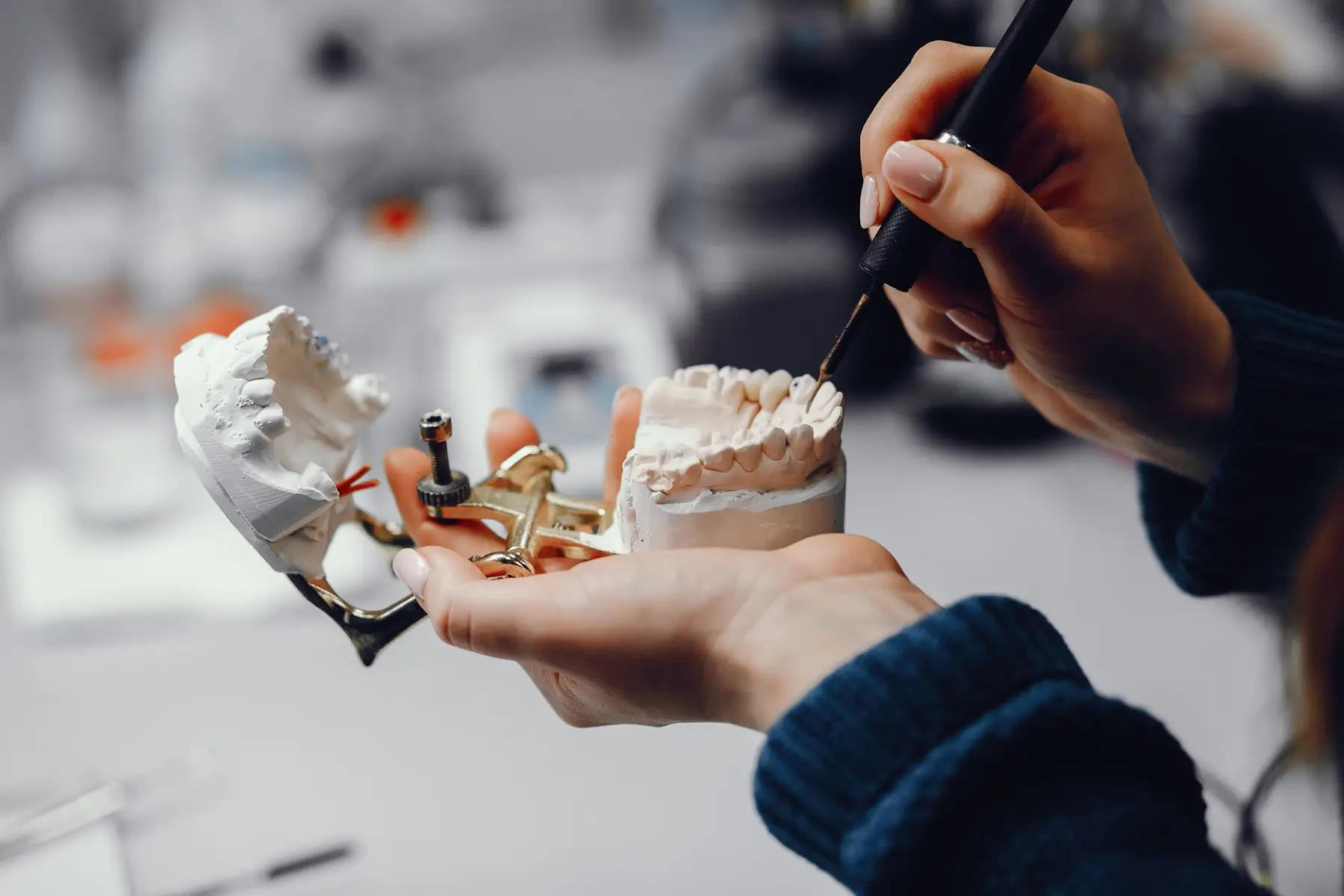
The honest answer is that the country is not the variable that decides this. Dental implants are placed successfully in Istanbul every week, and they fail in expensive practices in western Europe every week too. What changes the odds is a short list of things you can actually check before you commit, and this page is that list.
Istanbul European Clinic Medical Travel Services coordinates dental treatment in Istanbul with independent partner dentists. We do not place implants ourselves and we do not own a clinic, so the clinical judgement described here belongs to the dentist you are introduced to, not to us. That also means we have no reason to tell you every case is suitable. Some are not.
The short answer
A dental implant in Turkey is as safe as the assessment behind it, the dentist placing it and the follow-up arranged for the years afterwards. Implants are regulated treatment carried out by dentists registered with the Turkish Ministry of Health, and clinics treating international patients need health tourism authorisation to do so. The risk in medical travel is rarely the surgery itself. It is a plan built around a flight schedule rather than around bone healing, and a follow-up gap once you are home.
An implant is not the same thing as Turkey teeth
This matters because the two get discussed as though they were one procedure. They are close to opposites.
The Turkey teeth stories almost always involve crowns fitted over healthy natural teeth for appearance. Sound tooth tissue is removed that will never come back. An implant replaces a tooth that is already missing. There is no healthy tooth being cut down, and the neighbouring teeth are left alone, which is one of the main clinical arguments for an implant over a bridge.
So the reputational damage from one procedure tells you very little about the other. The questions you should ask are different too.
What actually decides whether an implant lasts
Whether there is enough bone, and what happens if there is not
An implant is anchored in bone. When a tooth has been missing for a while the bone that held it shrinks, and in the upper back jaw the sinus sits close above. If there is not enough height or width, the honest options are a bone graft or a sinus lift first, or a different treatment altogether. Both add months to the timeline and cost to the plan. A quote that ignores this after seeing a scan is not a cheaper quote, it is an incomplete one.
Gum health before anything is placed
If you lost teeth to periodontal disease, the same bacteria are still there. Implants can develop peri-implantitis, an inflammatory condition around the fixture that destroys the bone supporting it, and a history of gum disease is one of the clearest risk factors. Stabilising the gums first is not an upsell. Skipping it is how implants are lost in year three.
Smoking, diabetes and healing
Smoking meaningfully increases the risk of early implant failure and of later peri-implantitis. Poorly controlled diabetes impairs healing and raises infection risk. Neither is automatically a reason not to proceed, but both should appear in your consultation. If nobody asked, nobody assessed you.
Survival is not the same as success
Implant survival rates published in the literature are high, and clinics quote them freely. Read the word carefully. Survival usually means the fixture is still in the jaw. Success is a stricter standard that also asks whether the bone around it is stable, whether the gum is healthy and whether the tooth on top works and looks right. An implant can survive and still be a problem. When a clinic quotes a percentage, ask which of the two it is measuring.
Maintenance, for the rest of its life
Implants do not decay, which is why people assume they need less attention. The opposite is true of the tissue around them. They need regular professional cleaning and monitoring, and that happens where you live, not where they were placed. A plan that does not say who does this is unfinished.
Why implants cannot honestly be done in one short trip
This is the single most useful thing to understand before comparing quotes. After an implant is placed, the bone has to grow onto its surface, a process called osseointegration. That typically takes several months, longer where a graft was needed. Only then can the final tooth be attached and loaded properly.
Immediate loading, where a temporary tooth goes on straight away, is a real technique. It is also case-selective: it depends on good bone quality and on the implant being stable enough at placement. It is a clinical decision made in the moment, not a package feature that can be promised in advance to everybody.
In practice a proper implant plan means two trips, or one trip and a local arrangement for the second stage. If a quote fits placement, healing and final teeth into a single week for a whole arch, the healing time has not been removed by skill. It has been removed from the description.
| Stage | What happens | Roughly when |
|---|---|---|
| Assessment | Scan, gum assessment, medical history, written plan | Before travel |
| Placement | Implant fixture placed, temporary arrangement if suitable | First visit |
| Healing | Bone integrates with the implant surface | Several months |
| Final restoration | Impressions and the permanent crown or bridge fitted | Second visit |
| Maintenance | Professional cleaning and monitoring around the implant | Ongoing, where you live |
What you can verify before you book
- The dentist's name, not just the clinic's. A clinic cannot hold a registration; a person does.
- That they are registered to practise dentistry in Turkey, and their registration details.
- That the facility is authorised to treat international patients under Turkish health tourism rules.
- That the implant system has a brand name you can look up, and that you are told which one. Generic or unnamed fixtures are a problem years later when a part needs replacing and nobody can identify it.
- That a written treatment plan exists before payment, based on your scan, listing stages and dates.
- That the plan names who provides follow-up, and what happens if a complication appears after you are home.
- What the warranty actually covers, what voids it, and whether flights for a revisit are included.
Every item on that list is answerable in writing before you spend anything. A clinic that answers all seven has told you a great deal about how it works.
The parts that are genuinely harder from abroad
We would rather set these out than pretend they do not exist.
- Complications have bad timing. Most implant problems appear weeks or months later, by which point you are in another country.
- Continuity of records. A dentist at home takes over a case they did not plan. Ask for your scans, the implant system details and the surgical report in a form you can hand over.
- Warranties across borders. A guarantee that requires you to return is only as good as your ability to take the time off and pay for the flight.
- Redress if things go badly. Making a complaint or a claim in a country whose language and legal system you do not know is harder, and that is true of any destination, not only Turkey.
None of these makes treatment abroad unreasonable. They are the reasons the follow-up plan deserves as much attention as the price, and they are the questions most quotes leave out.
Red flags
- A price fixed before anyone has seen a scan.
- A full arch promised as placed and finished within one holiday.
- The implant brand withheld or described only as European quality.
- No named dentist at any point in the correspondence.
- Pressure to pay a deposit today for a price that expires tomorrow.
- A guarantee with no written conditions attached.
- No answer, or a vague one, to the question of who treats a problem after you fly home.
So, is it safe?
For a suitable patient, with enough bone, stable gums, a named registered dentist, a staged plan that respects healing time and a written follow-up arrangement, dental implants in Turkey are a reasonable option and large numbers of people have them without incident.
For a patient with untreated gum disease, insufficient bone, a plan compressed into five days and no answer about aftercare, the answer is no. That is not a statement about Turkey. It would be no in any country, and it is the plan being described that makes it so.
If you have a quote in front of you and want a second read on it, send it to us with your scan and we will tell you what we think of the plan, including the cases where our answer is that you should not travel for it. Our partner dentists make the clinical decisions and we will not overrule them or speak for them.
If your question is about what implants cost rather than whether they are safe, the dental implants treatment page sets out the starting price and what changes it, and the All-on-4 and All-on-6 pages cover full arch cases.