
Article
Turkey Teeth Gone Wrong: What Actually Goes Wrong, and Why

An independent partner dentist checked the medical claims on this page. What applies to your own case is decided by the dentist who examines you.
Written by the editorial team, not by a clinician. Nothing here is medical advice: your independent partner surgeon decides what applies to you.
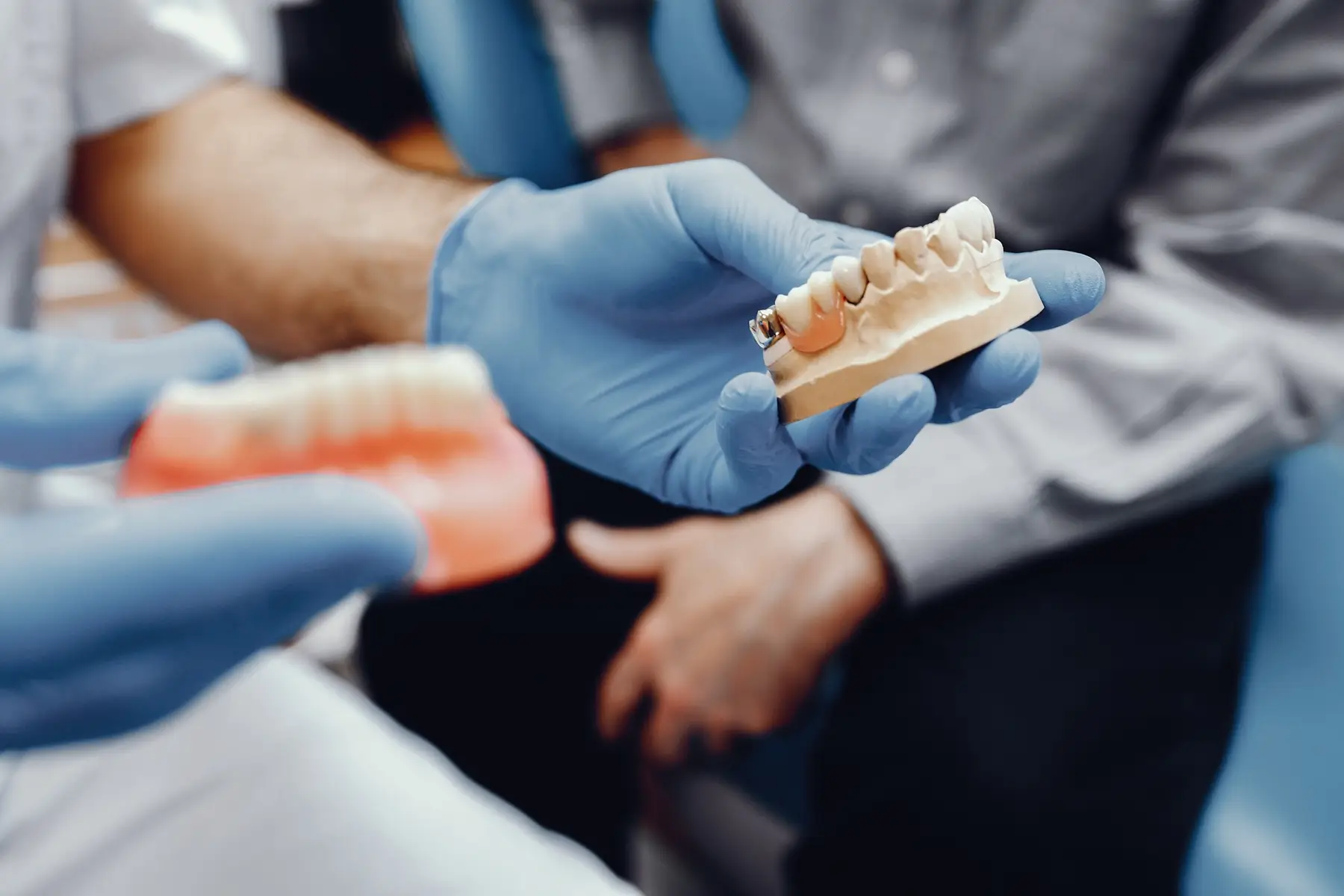
Search for Turkey teeth gone wrong and you will find the same photographs again and again: grey gum lines, teeth that look too white and too uniform, people in pain a year later. The stories are real. What is usually missing from them is the part that decides the outcome, which is what was actually done to the teeth underneath.
Istanbul European Clinic Medical Travel Services coordinates dental treatment in Istanbul with independent partner dentists. We are not neutral about this subject, and it would be easy for us to tell you the failures are rare and always someone else. They are not rare enough, and the pattern behind them is specific and predictable. This page explains that pattern, because a patient who understands it can spot a bad plan before they board a plane, whoever arranges it.
What people actually mean by Turkey teeth
In almost every case that reaches the news, Turkey teeth means full-coverage crowns fitted to natural, healthy teeth. It rarely means veneers, even though veneers are the word used in the marketing, and it almost never means implants.
That distinction is not pedantry. It is the whole story, because the three procedures ask completely different things of the tooth underneath.
| Procedure | What happens to the natural tooth | Reversible? |
|---|---|---|
| Composite bonding | Material is added to the tooth surface, little or nothing is removed | Largely yes |
| Veneer | A thin facing is bonded to the front; a small amount of enamel is shaped | No, but the tooth stays largely intact |
| Crown | The tooth is reduced on every surface to make room for a cap over the whole tooth | No. The tooth needs a crown from then on |
| Implant | There is no natural tooth. A fixture is placed in the jawbone to replace a missing one | Not applicable |
A crown is a legitimate, common and often necessary treatment. Dentists place them every day on teeth that are heavily filled, cracked, root treated or worn down. The problem is not the crown. The problem is a crown placed on a healthy tooth for appearance alone, and then repeated across twenty teeth in a week.
Why removed enamel is the real cost, not the price
Enamel does not grow back. To seat a crown, the dentist has to reduce the tooth on all sides, and on a healthy tooth that means cutting away sound tissue that was doing its job. Once that is done, the tooth is committed. It will need a crown for the rest of your life, and every replacement crown down the years starts from a smaller tooth than the one before.
This is the part that people describe as the trap. The price they compared was the price of the first set. The commitment they took on was a lifetime of replacements, and the fee for each of those is charged wherever they happen to live then, not where the first set was fitted.
None of that is an argument about which country you fly to. A healthy tooth crowned in London is just as irreversibly crowned as one done in Istanbul. It is an argument about whether crowns were the right procedure for your teeth in the first place.
What actually goes wrong
The nerve dies and the tooth needs a root canal
Preparing a tooth for a crown generates heat and removes tissue close to the pulp, the living nerve and blood supply inside the tooth. Sometimes the pulp does not recover. When that happens the tooth can become painful, discoloured or abscessed, months or even years after the work looked finished, and it then needs root canal treatment through the new crown or the crown replaced altogether.
This is a recognised risk of crown preparation everywhere. What changes the odds is how much tooth is removed, how carefully the preparation is cooled and staged, and how many teeth are treated in one sitting.
The gum line goes dark, sore or bleeds
Where the crown meets the tooth there is a margin. If that margin sits too deep under the gum, or if it is rough or overhanging, plaque collects in a place a toothbrush cannot reach. The gum responds by becoming inflamed, and inflamed gum bleeds, recedes and darkens. That grey line people photograph is often not the crown itself. It is the tissue reacting to it.
The bite was changed all at once
Crowning a single tooth means matching one tooth to the bite you already have. Crowning twenty means building a new bite. If the new one does not match how your jaw actually closes and moves, the result can be jaw ache, headaches, teeth that feel high, chipped porcelain, or crowns that come loose repeatedly. Rebuilding a whole bite is a specialist undertaking that is normally staged, tested with temporaries and adjusted, not delivered in a single week.
There was untreated gum disease underneath
Crowns do not treat periodontal disease, they cover it. If bone loss around the teeth is not diagnosed and stabilised first, the teeth carrying the new crowns keep losing their support. People describe this as the crowns failing. The crowns were often fine. The foundation was not.
Nobody is responsible for what happens next
Most of the distress in these stories is not about the day of treatment. It is about month eight, when something hurts, the clinic replies slowly or not at all, and a dentist at home is being asked to take over work they did not plan and cannot guarantee. Aftercare is the part that is easiest to leave out of a package and hardest to buy afterwards.
Why the same failures cluster around the same kind of trip
The failures are not evenly spread across Turkish dentistry. They cluster around one commercial model, and it is recognisable from the outside.
- A price quoted per smile rather than per tooth, before anyone has seen an x-ray.
- Twenty or more crowns proposed for teeth that are healthy, straight enough and simply the wrong colour.
- The whole treatment compressed into four or five days because that is the length of the holiday package.
- No periodontal assessment, no discussion of gum health, no mention of your bite.
- The word veneers used for what the consent form later calls crowns.
- No named dentist. You are told the clinic, never who will actually hold the drill.
- No written plan for what happens if something fails after you fly home.
Every one of those is a scheduling or a sales decision, not a clinical one. That is why the same country produces both outcomes: careful multi-visit dentistry that lasts, and week-long cosmetic conversions that do not.
What a slower plan looks like
Whoever you go to, the shape of a defensible plan is broadly the same.
- Records first: x-rays, photographs and a gum assessment before any price is fixed.
- A diagnosis that names the problem. Discolouration, crowding, wear and missing teeth are different problems with different answers, and only some of them call for crowns.
- The least destructive option that solves it. Whitening, bonding or orthodontics are considered and ruled out in writing, not skipped.
- Gum disease and decay treated before anything cosmetic begins.
- Temporaries you live with, so the shape, length and bite can be tested before the final work is made.
- At least two visits with real time in between, and a plan that says what happens at each.
- A named dentist, and a written answer to who treats a complication after you are home.
That plan takes longer and it does not fit neatly into a long weekend. If a quote is dramatically faster than this, the speed is the thing being sold, and the speed is the thing that fails.
If it has already gone wrong
See a dentist where you live first, and quickly, especially if there is pain, swelling, a bad taste or bleeding that does not settle. An infection under a crown is a clinical problem with a clock on it, not a cosmetic complaint, and it is treated where you are.
Then gather what you have: the original treatment plan, the consent forms, any invoices, the x-rays if the clinic will release them, and photographs from before and after. Redoing this kind of work without knowing what was removed is guesswork, and the difference between a re-crown and a full reconstruction usually turns on what is still there underneath.
Be sceptical of anyone who quotes for a full redo from photographs alone. That is the same shortcut that produced the problem.
Where this leaves treatment in Turkey
It would be dishonest for us to end this by saying our own market is fine. What is true is narrower and more useful: the failures track a treatment model, not a border. The questions above sort good plans from bad ones in Istanbul, in London and in Bucharest, and a clinic that cannot answer them is telling you something regardless of its address.
Istanbul European Clinic does not perform dental treatment and does not own a clinic. We coordinate care with independent partner dentists, which means the clinical decisions and the clinical responsibility are theirs and we will say so plainly rather than blur it. If a plan you have been sent looks like the pattern described here, you are welcome to send it to us and we will tell you what we think, including when the answer is that you should not travel for it.
If your question is about what specific dental work costs rather than what goes wrong with it, the treatment pages set that out per procedure: crowns, veneers, zirconium crowns and dental implants each have their own page with the starting price and what changes it.
Questions to ask before you agree to anything
- Are you proposing crowns or veneers, and how much of each tooth will be removed?
- Which of my teeth are healthy right now, and why does each of them need treatment?
- What did the x-rays show about my gums and bone?
- What are the alternatives to crowns for my case, and why have you ruled them out?
- Who is the dentist doing the work, and what is their registration number?
- How many appointments, over how many days, and what happens at each?
- Will I have temporaries, and how long will I wear them?
- What is the warranty, what voids it, and who pays for a flight back if it is needed?
- If a crowned tooth becomes painful in a year, who treats it and where?
A dentist who is happy to answer all nine has nothing to hide and no reason to rush you. That is most of the assessment.