

Medically reviewed by Dr. Arda, Plastic Surgery
Every year, thousands of people travel overseas for liposuction — and for many, it turns out to be a well-judged decision. Lower prices, shorter waiting times and access to experienced body-contouring surgeons are all genuine draws. But going abroad for surgery is a bigger decision than booking a holiday, and the questions that matter most aren’t only about cost. They’re about where to go, who to trust, and how to stay safe from your very first search right through to your recovery back home.
This guide is written to help you make that decision with your eyes open: why the price gap exists, how to tell a good clinic from a risky one, how to compare destinations against your own priorities, and — the part most guides skip — what actually happens once you’re back home.
Why do people get liposuction abroad?
The reasons are usually a mix of the following:
- Cost. Cosmetic procedures are often considerably cheaper overseas — frequently a fraction of the price charged privately in the UK. The saving comes from lower operating costs in the destination country, not from cutting clinical corners (more on that below).
- Shorter waits. Liposuction is a cosmetic procedure, so it isn’t available on the NHS in almost all cases, and private waiting lists can be long. Many overseas clinics can offer an appointment within weeks.
- Access to specific surgeons or techniques. Some destinations have a high concentration of surgeons who perform body contouring day in, day out, and offer techniques such as VASER or laser-assisted liposuction.
- Combining treatment with time away. Recovering somewhere quiet, with hotel and transfers arranged, appeals to a lot of people.
All of these are legitimate. The one thing we’d caution against is letting price be the only deciding factor — the cheapest quote is rarely the cheapest overall trip, and it’s almost never the safest.

Is liposuction really cheaper abroad — and why?
Yes, it usually is — and understanding why helps you judge whether an offer is genuinely good value or too good to be true.
The price difference comes down to economics, not standards. Staff salaries, rent and the general cost of running a clinic are lower in many popular destinations, so the same procedure can be priced well below UK private rates while still being carried out by a qualified surgeon in an accredited facility. A price that’s dramatically lower than everyone else’s, on the other hand, is a red flag worth taking seriously.
It also helps to separate the “sticker price” from the true cost of the trip. When you compare quotes, factor in:
- Return flights and any extra nights if your recovery runs long
- Compression garments, medication and follow-up scans
- Travel insurance that specifically covers cosmetic surgery and any complications
- The possibility (and cost) of a revision procedure later
A clear, all-inclusive package that spells out exactly what’s covered is usually better value than a bare surgical fee with extras bolted on. For a full breakdown of what an all-inclusive package can include, see our guide to liposuction in Turkey.
Is liposuction abroad safe?
Liposuction abroad can be very safe — but only when it’s done by the right surgeon in the right facility, and that’s entirely within your control to check.
It’s worth being honest about the risks, which fall into two groups. First, the risks that come with liposuction anywhere: bruising, swelling, infection, fluid build-up (seroma), uneven results, and, rarely, more serious complications. Second, the risks that are specific to travelling for surgery: medical regulation and complaint procedures vary from country to country; you’re further from your surgeon during the crucial early recovery period; and long flights soon after surgery carry an increased risk of blood clots (deep vein thrombosis).
You may have seen alarming headlines about deaths linked to cosmetic surgery abroad. These cases are rare, and they are very often connected to unaccredited clinics, procedures with no clearly named surgeon, or patients being pushed toward more surgery than is safe in one sitting. In other words, the danger usually lies in poor choices that careful vetting is designed to prevent. The NHS publishes useful guidance on the risks of cosmetic surgery abroad, and it’s well worth reading alongside this article.
How to choose a safe clinic and surgeon abroad
This is where most of your research effort should go. Use it as a checklist:
- Insist on a named, qualified surgeon. You should know exactly who will operate on you, and be able to check their credentials. Look for membership of recognised bodies such as ISAPS (the International Society of Aesthetic Plastic Surgery) or a national plastic surgery board, and verify it on the organisation’s own register rather than taking the clinic’s word for it. In the UK you can cross-check a doctor’s registration on the GMC register, and bodies such as BAAPS publish helpful patient-safety guidance.
- Check the facility’s accreditation. Internationally recognised standards such as JCI or ISO indicate the hospital meets established safety protocols.
- Look at real evidence, not just marketing. Ask for before-and-after photos of the surgeon’s own patients, and read independent reviews on platforms the clinic doesn’t control. Be wary of galleries of flawless, stock-like images and reviews that all sound the same.
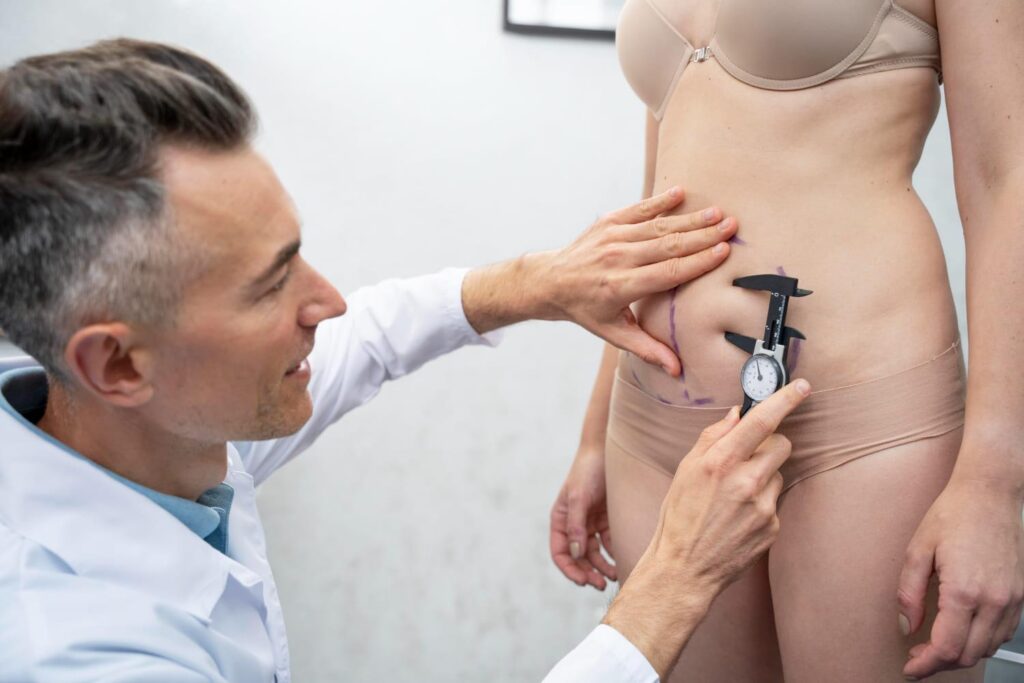
- Have a proper video consultation before you commit. A good clinic will assess your suitability, explain the technique, set realistic expectations, and answer questions such as: How many of these procedures do you perform? What happens if I have a complication? How much fat can safely be removed in my case? Who looks after me afterwards? If you also have loose skin as well as excess fat, ask whether liposuction alone will meet your goal or whether a procedure such as a tummy tuck would be more suitable.
- Get a written treatment plan and informed consent. You should receive clear, written information about the procedure, the risks and the aftercare — not just a verbal reassurance.
- Ask how complications are handled. Find out what the clinic does if something goes wrong, both while you’re there and once you’ve flown home.
If a clinic is reluctant to name your surgeon, rushes you toward a deposit, or leans entirely on price, treat that as your answer.

Best countries for liposuction — and how to choose yours
There’s no single “best” country — the right destination depends on what matters most to you. Rather than ranking them, it’s more useful to weigh a few factors: how far you’re willing to travel, whether English-speaking care matters, the price band, how mature the country’s regulation is, and whether it specialises in the technique you want.
A quick, honest overview of the destinations UK patients most often consider:
- Turkey. One of the most established destinations for body contouring, with a high volume of experienced surgeons, English-speaking patient coordination, a full range of techniques, and all-inclusive packages that bundle hotel and transfers. A strong all-round option for UK and European patients, which is why it’s so often shortlisted.
- Poland, Czech Republic and Lithuania. Popular within Europe for shorter flights and well-regarded surgeons, typically at a mid-range price point.
- Mexico. A common choice for patients travelling from North America, thanks to proximity and a large medical-tourism sector.
- Thailand and South Korea. Known for advanced facilities and high procedure volumes, though the distance means a longer trip and more recovery before it’s safe to fly home.
If Turkey is on your shortlist, our dedicated guide to liposuction in Turkey covers the techniques offered, what’s included in a package, and how to arrange a consultation.
Planning your trip: what to sort before you fly
Going abroad for surgery works best when the whole journey is planned, not just the operation. A realistic sequence looks like this:
- Research and shortlist clinics, and verify the surgeons’ credentials.
- Have a video consultation and get a written treatment plan and quote.
- Book, and complete any pre-operative tests or health checks your clinic requests.
- Travel, allowing a little buffer around your dates.
- Have the procedure, and follow your surgeon’s instructions closely in the first days.
- Stay in the country long enough. Don’t book your return flight too early — your surgeon will advise how many days you should remain before it’s safe to travel.
- Fly home safely. To reduce the risk of blood clots, follow your surgeon’s guidance on when it’s safe to fly, wear your compression garments, stay hydrated, and move around during the flight.
After you get home: aftercare and what to do if something goes wrong
This is the part clinics rarely dwell on, and it’s the part worth getting right.
Before you travel, make sure you understand how follow-up works once you’re home. Reputable clinics offer remote follow-up — video calls or a dedicated contact — so you can check in, share photos of your healing and raise concerns. Ask how you’ll reach them and how quickly they respond.
You should also know how to manage ordinary recovery at a distance: how long to wear compression garments, what normal swelling and bruising look like, and which symptoms mean you should seek help locally without delay (for example, signs of infection or a possible blood clot).
It’s worth being realistic about your GP and the NHS, too. The NHS will treat you in an emergency, but it isn’t set up to provide routine aftercare or revisions for cosmetic surgery you chose to have privately abroad, and some GPs are cautious about managing complications from procedures they weren’t involved in. Knowing this in advance — and having your clinic’s aftercare and, ideally, appropriate insurance in place — saves a great deal of stress.
Finally, understand your position if something goes seriously wrong. Your legal recourse and ability to claim will differ from country to country, and pursuing a complaint across borders can be difficult. This is another reason to choose an accredited clinic with a clear complications and revision policy from the outset.
Who should think twice about going abroad
Travelling for surgery isn’t right for everyone, and a trustworthy clinic will tell you so. It may not be the best option if:
- You have underlying health conditions that make surgery or long-haul travel riskier.
- You can’t travel with someone, or won’t have support during early recovery.
- You aren’t able to commit to the follow-up the clinic recommends.
- Your expectations are unrealistic, or you’re choosing purely on the lowest price.
None of this means abroad is the wrong choice — for most well-informed, healthy patients it can work very well — but it’s worth being honest with yourself before you book.
Frequently asked questions
What’s the best country for liposuction abroad?
There isn’t one universal answer — it depends on your priorities around cost, distance, language and the technique you want. Turkey is one of the most popular all-round options for UK and European patients because of its experienced surgeons, English-speaking coordination and all-inclusive packages.
Which country is cheapest for liposuction?
Prices vary widely by country and clinic, and the cheapest headline price isn’t always the best value once flights, aftercare and insurance are included. Focus on the total cost of a safe, accredited option rather than the lowest quote.
Is liposuction abroad safe?
It can be very safe when performed by a qualified, named surgeon in an accredited facility. Most serious problems are linked to unaccredited clinics and poor vetting — which careful research is designed to avoid.
What happens to liposuction results years later?
Liposuction removes fat cells permanently, but significant weight gain afterwards can still change your shape. A stable weight and healthy lifestyle help keep results looking their best over time.
Is liposuction abroad covered by insurance?
Cosmetic liposuction generally isn’t covered by standard health insurance, whether at home or abroad. You should also arrange travel insurance that specifically covers surgery and any complications.
What if I have complications once I’m back home?
Contact your clinic’s aftercare service straight away, and seek urgent local medical help for anything serious. This is why choosing a clinic with genuine remote follow-up and a clear complications policy matters so much.
How long should I stay abroad after liposuction?
Long enough for your surgeon to check your early recovery and clear you to fly — this varies by case, so follow their specific advice rather than booking your return too soon.
Considering Turkey?
Liposuction abroad can be a safe, cost-effective way to achieve the results you’re after — as long as the decision is driven by careful research rather than price alone. If Turkey is on your shortlist, read our full guide to liposuction in Turkey for the techniques available, what’s included in an all-inclusive package, and how to book a free consultation with our team. You can also browse our full range of plastic surgery in Turkey procedures.