


Medically reviewed by Dr. Arda Akgun · Written by Akya karahan
A skinny BBL is a Brazilian Butt Lift adapted for leaner patients — people with a lower body-fat percentage who want to round out flat areas or soften hip dips without a dramatic increase in size. It uses your own fat, carefully harvested by liposuction from several parts of the body and re-injected to reshape the buttocks in proportion with a slim frame. If you have been told you might not have “enough fat” for a standard BBL, this guide explains how a skinny BBL works, who it suits, what it costs, and what results are realistic.
What is a skinny BBL?
A skinny BBL (also written “skinny Brazilian Butt Lift”) is a version of the BBL designed for people who have less body fat to spare. The surgical steps are the same as a traditional BBL — fat is removed by liposuction, purified, and injected into the buttocks — but the emphasis shifts. Because a leaner patient has less donor fat, the surgeon gathers smaller amounts from multiple areas and focuses on refined contouring and proportion rather than a large increase in size. The American Society of Plastic Surgeons has described this “less is more” approach as a growing trend toward subtler, more natural buttock enhancement.
The goal is usually to correct hip dips, add a gentle curve, and improve the waist-to-hip ratio, while keeping the result congruent with a slim body. A skinny BBL typically transfers roughly 500–800cc of fat per side, compared with the larger volumes used in a standard BBL.
Skinny BBL vs mini BBL vs traditional BBL
These terms overlap and are often used loosely, which causes confusion. In practice:
| Type | Ideal candidate | Fat transferred | Typical result |
|---|---|---|---|
| Skinny BBL | Lean / lower-BMI patients with limited donor fat | ~500–800cc per side, from several areas | Subtle, natural curve; better proportion |
| Mini BBL | Those wanting a small, targeted change (e.g. hip dips) | Small, focused volume | Minor, localised refinement |
| Traditional BBL | Patients with more donor fat wanting fuller curves | ~1,000cc+ per side | More pronounced projection and volume |
A skinny BBL and a mini BBL can overlap; the main difference from a traditional BBL is how much donor fat is available and how dramatic the change is.
Who is a good candidate for a skinny BBL?
Being slim is the starting point, not the only requirement. Good candidates usually:
- Have a lean body type, often with a BMI in the low-to-mid 20s.
- Have enough harvestable fat somewhere — abdomen, flanks, or thighs — even if they are thin overall.
- Are non-smokers, or willing to stop before and after surgery, since smoking harms fat survival and healing.
- Are at a stable weight and can keep it stable afterward.
- Want subtle, proportionate enhancement rather than a dramatic transformation.
- May be bothered by hip dips or a flat, undefined shape.
Is there a minimum weight — and should you gain weight to qualify?
There is usually no strict minimum weight, but there is a practical floor: you need enough fat to harvest safely. Patients who are genuinely underweight often are not good candidates, because there simply is not enough donor fat.
One important warning: do not deliberately gain weight to qualify. Rapid weight gain tends to add visceral fat — the deep fat around your organs — which liposuction cannot remove and which is not useful for grafting, and it can be unhealthy. If a provider urges you to bulk up before surgery, treat that as a red flag. A good surgeon assesses whether you have enough harvestable fat as you are, and tells you honestly if you do not.
Skinny BBLs are most often performed on women, but leaner men seeking gluteal or hip contouring can also be candidates; the same fat-availability rules apply.
How the skinny BBL procedure works
A skinny BBL is performed under general anaesthesia (sometimes sedation) and follows three stages:
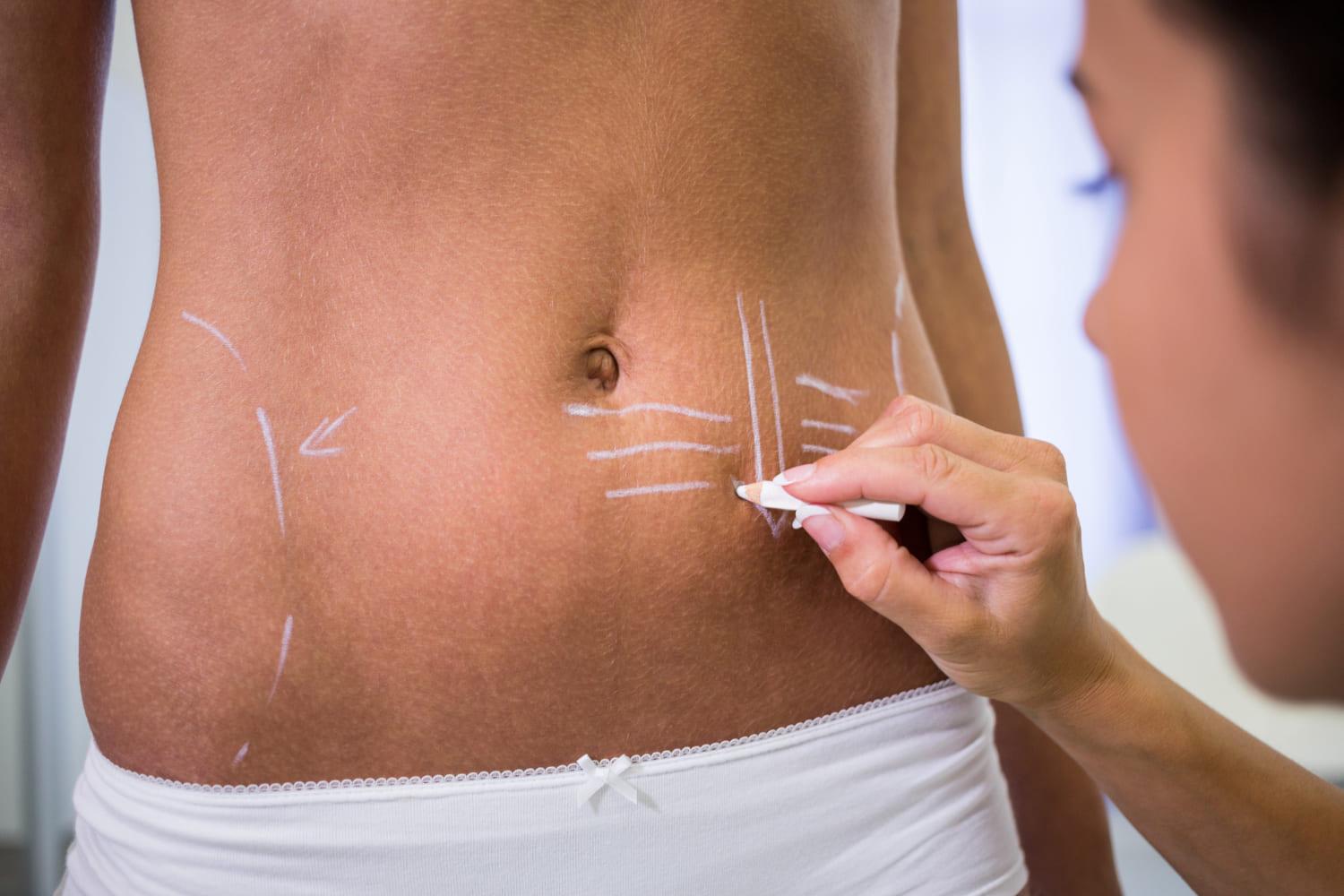
- Harvest — fat is removed by liposuction, typically from several donor sites to gather enough for a slim patient.
- Purify — the fat is processed so only the healthiest cells are kept for transfer.
- Inject — the purified fat is placed into the buttocks in small amounts, into the subcutaneous layer above the muscle, to sculpt shape and fill hip dips.
Because leaner patients have limited fat, precision matters more than volume: the surgeon spreads the harvest across areas and grafts carefully to make the most of what is available.
Where does the fat come from on a slim frame?
On a slim body, surgeons take donor fat wherever there is enough to pinch — commonly the abdomen, flanks (love handles), inner and outer thighs, lower back or bra-roll area, and sometimes the arms. This is part of the appeal: the liposuction used to gather fat also slims and defines those areas, so many patients gain a snatched waist or a thigh gap alongside the buttock enhancement. In that sense, a skinny BBL is as much about full-body contouring as it is about adding volume.
Skinny BBL safety and risks
A skinny BBL carries the same core risks as any BBL: swelling, bruising, temporary numbness, asymmetry, infection, and partial reabsorption of the transferred fat (some fat naturally does not survive). The most serious risk specific to buttock fat grafting is fat embolism, which can occur if fat enters the large veins inside the gluteal muscle.
This is why technique matters enormously. Following several patient deaths, a multi-society task force of plastic surgery organisations issued safety advisories that are now standard of care: fat must be injected only into the subcutaneous space, above the gluteal fascia — never into the muscle — and many surgeons use real-time ultrasound guidance to keep the cannula in the safe plane. International bodies such as ISAPS have issued the same guidance. Choosing a surgeon who follows these protocols is the single most important safety decision you can make. Smaller fat volumes do not make a skinny BBL automatically “safer,” but proper subcutaneous, ultrasound-guided technique substantially lowers the most serious risk.
Scarring is minimal — the liposuction and injection are done through tiny incisions that usually fade to barely visible marks.
Skinny BBL results and recovery
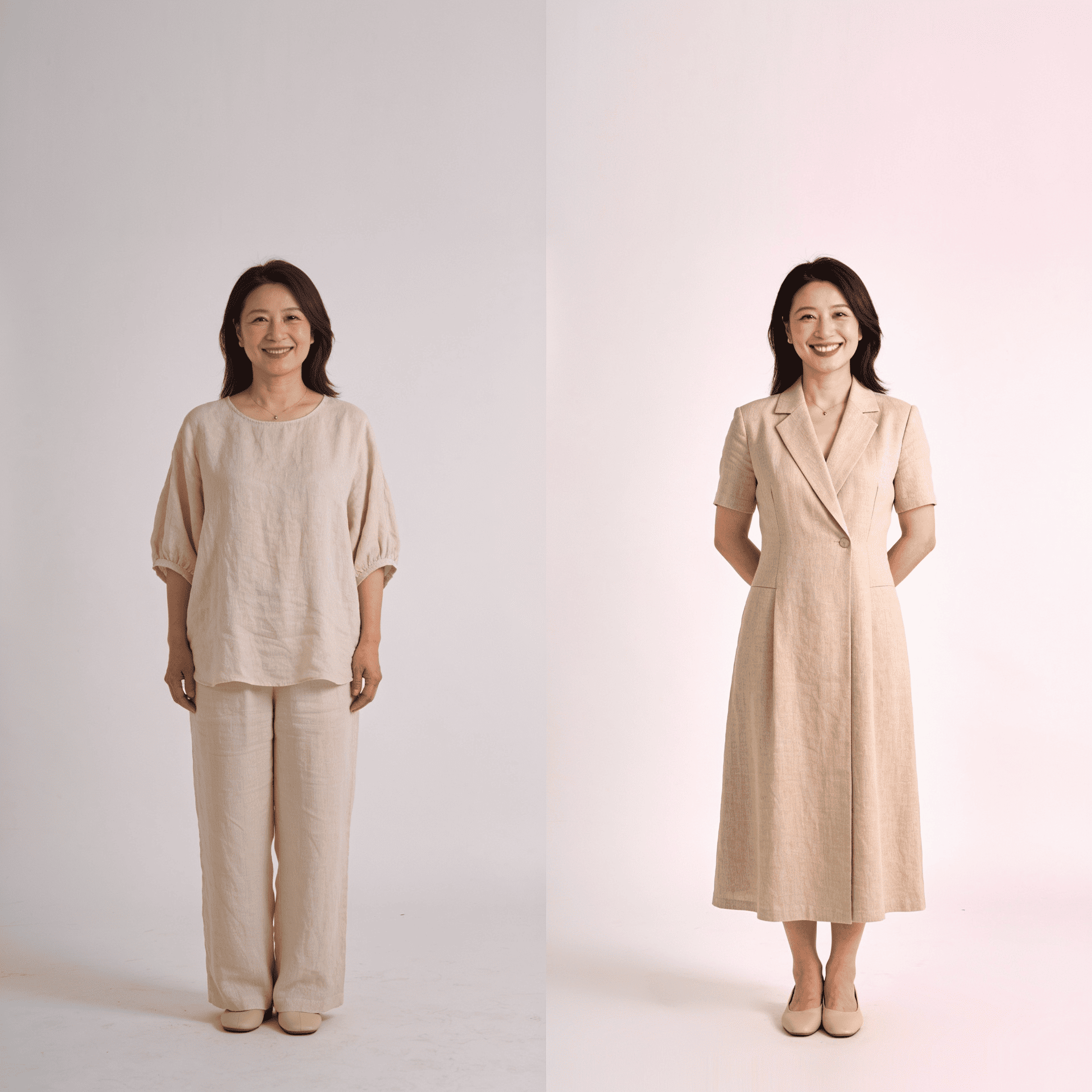
Set expectations for subtle, natural results. A skinny BBL refines and rounds; it will not produce an exaggerated, dramatically curvier silhouette — and trying to force that onto a slim frame usually looks unnatural. Most patients see a softer, more proportionate shape with improved waist-to-hip balance.
Results appear gradually. Early swelling makes the buttocks look fuller at first; over three to six months the “fluffing” stage sets in as swelling resolves and the fat settles, revealing the final shape. Once the transferred fat establishes a blood supply (around three to six months), the surviving fat is generally permanent, though it will shrink or grow if your weight changes significantly.
Recovery basics:
- Avoid sitting or lying directly on your buttocks for roughly two to six weeks; use a BBL pillow when you must sit.
- Wear a compression garment as directed to control swelling and shape the contour.
- Most people return to desk work in about one to two weeks (with a pillow) and resume exercise around four to six weeks, once cleared by the surgeon.
When reviewing before-and-after photos, look for patients with a similar starting frame to yours, and remember that early photos may still be swollen.
What if you’re too skinny to qualify?
If you do not have enough harvestable fat, you still have options — and a reputable clinic will tell you honestly rather than push surgery:
- Non-surgical contouring: injectable fillers such as Sculptra (poly-L-lactic acid) or hyaluronic-acid products can add modest volume and stimulate collagen. Results are temporary and subtle, and several sessions may be needed, but there is no surgery or downtime.
- Targeted liposuction: sometimes improving your proportions is more about slimming the waist and thighs than adding to the buttocks. Liposuction alone can sharpen your silhouette and enhance curves without any fat transfer.
- Reaching a healthy, stable weight first: if you are underweight, safely getting to a normal weight (not bulking on junk food) may make you a candidate later on.
A consultation is the only reliable way to know which path fits your body.
Is a skinny BBL right for your frame? Our surgeons assess your fat distribution and goals and give you an honest, personalised plan — including whether liposuction contouring alone might suit you better.
How much does a skinny BBL cost?
The price of a skinny BBL depends on the surgeon’s experience, the clinic and country, the extent of liposuction (skinny BBLs often need more donor areas), anaesthesia, and whether it is booked as a package. Because it involves more liposuction sites, a skinny BBL can sometimes cost a little more than a straightforward BBL. Typical published market ranges look like this:
| Country | Typical price range (skinny BBL) |
|---|---|
| Turkey | €3,000 – €5,000 (often all-inclusive) |
| United Kingdom | £7,000 – £12,000 |
| United States | $8,000 – $15,000 |
Ranges are typical market figures shown for illustration only; actual prices vary by case, clinic, and technique. Request a personalised quote for accuracy.
Skinny BBL in Turkey
Turkey has become a leading destination for BBL and skinny BBL surgery, largely because experienced, high-volume surgeons and lower operating costs make the procedure far more affordable than in the UK or US — often as an all-inclusive package covering surgery, hospital stay, accommodation, transfers, and garments. When choosing a clinic abroad, put safety and technique first: look for accredited hospitals (JCI or ISO), surgeons who use subcutaneous, ultrasound-guided grafting, and transparent before-and-after evidence from patients with a similar frame to yours. Istanbul European Clinic evaluates each patient’s fat distribution during a virtual consultation to confirm candidacy and set realistic expectations before you travel.
Frequently asked questions
What is a skinny BBL?
A Brazilian Butt Lift adapted for leaner patients, using smaller amounts of your own fat (often around 500–800cc per side) to subtly reshape the buttocks and improve overall proportion.
Can you get a BBL if you’re skinny?
Usually yes, as long as you have enough harvestable fat somewhere on your body. Genuinely underweight patients may not qualify, and you should never gain weight artificially to become eligible.
Is a skinny BBL worth it?
For lean people who want a natural, proportionate improvement — especially to hip dips — it can be very satisfying. It is not the right choice if your goal is a dramatic increase in size.
How much does a skinny BBL cost?
Typically around €3,000–€5,000 in Turkey, £7,000–£12,000 in the UK, and $8,000–$15,000 in the US, depending on the case. A personalised quote is essential.
How long does a skinny BBL last?
Once the transferred fat survives (around three to six months), results are generally long-lasting, but significant weight gain or loss will change them.
Is a skinny BBL safer than a regular BBL?
Not automatically. Safety depends far more on technique — subcutaneous, ultrasound-guided fat placement — than on the amount of fat transferred.